Friday, 15 September 2023

Rowley Shoals

I have one photograph from the Rowley Shoals, where we’ve been for the past two days.


They are a reef system of three underwater atolls (the Mermaid, Clerke, and Imperieuse reefs) on the very edge of the Australian continental shelf, 260km west of Broome. Each is a teardrop roughly 90 km2 of reefs surrounding lagoons. The picture is of a small islet called Bedwell island at the north end of Clerke reef, which is home to some very rare birds, so nobody is allowed on. However, if you have a permit, you are allowed to dive and snorkel here. I snorkelled at the reef for the past two days. It has amazing coral and fish and sea slugs and clams and flying fish… It also has incredible water which varies from bright aqua to deep blue, in stunning bands.


Coral reef photos, especially a forest wall of green staghorn coral rising from the depths, with rainbows of coloured fish swimming amongst it, and a small reef shark and a green turtle.


And the sunsets are spectacular.


We are currently on our way back to Broome so someone can be medically evacuated.

Wednesday, 13 September 2023

Cable Beach, Minyirr Park and Lurujarri Trail

Cable Beach is the ocean beach at Broome. It’s where the original cable from Indonesia originally reached Australia in the 1800s.

This morning I caught the first bus which is the only one that goes to Gantheaume Point (at the very southern end of cable beach). Cars can get onto the beach here, and it’s a five kilometre walk up the beach to the lifesaving club.

I didn’t intend to stay on the beach. Behind the beach is the Minyirr Park, which is native bushland with excellent paths, mainly parallel to the beach (the Lurujarri Trail), cared for by traditional owners. My plan was to leave the beach at the first signed path from the beach, and walk the remainder of the distance through the bush. As well as being a more interesting experience, I was less likely to get severely sunburnt.

The beach was good, especially the boats moored near the end of the beach.


I was interested in just how many crabs had dug holes in the sand just above the current neap tide marks


The trails were fantastic.


But eventually all good things come to an end, and the trails ended and the beach appeared again.


Pearls

When I was a child, I was taught that Broome was the centre of the Australian pearl industry. Today I learnt a lot about it.

Pearl shells from the extended Kimberley coastline (let’s say roughly between Darwin and Dampier) have always been collected by local aborigines, decorated with ochre pigments, and worn by men of high status. There was an extensive trade in these shells. The local pearl shell is the largest of the five types of pearl shell, so these were pretty big shells.

When Europeans came to the area, they collected the shells and made them into buttons. It quickly became the third largest industry in Western Australia. At its peak, 75% of the world’s buttons came from here. Pearl shells in shallow waters were quickly depleted. So they started to dive to collect the shells from below the water. Local aborigines were taken from their homes and forced to dive. Divers came from other countries - mainly Malaysia and the Philippines as indentured labour. Japanese divers were in high demand because they could dive deeper and collect more shells, so they were paid more, and I’m not sure that they were indentured. 


Techniques changed, and hard hat diving started.


This coastline is the worst in the world for tropical storms (cyclones or hurricanes), and Broome was battered by several of them. Pearling could only occur during half of the year, and in the off season all the pearling Lugers were anchored in Dampier creek (the mangroves had all been chopped down). The First World War meant that the pearling industry was very hard hit. Nobody wanted pearl buttons, and all the men went to war. However, the Second World War was worse. All the men went to war, the Japanese divers went to internment camps. But then the Japanese attacked the top half of Australia, and the government decided on a scorched earth policy, destroying most of the pearling infrastructure and evacuating women and children south.

Broome was one of the first two places attacked. Firstly Darwin was attacked, and then shortly afterwards Broome. Broome was an airbase, but, at the time it was seen as safe, and all the Dutch women and children were evacuated via Broome from what’s now Indonesia. Over 800 of them were about to leave. They used flying planes on Roebuck bay to load the refugees. They walked across the sand to the planes, waited for the water to come in and took off. Shortly before they were due to take off all the flying planes were strafed by an unexpected Japanese attack, and all but one was destroyed (it took off). At least 80 people died. The airbase was also destroyed.


It was very difficult for the top end of Australia to rebuild after the war, and pearling was no exception. The Japanese divers were sent back to japan, and there wasn’t much equipment left. Then, in the 1950s, plastic replaced pearl buttons.

Very few salt water pearl shells ever produce pearls. However, the Japanese developed cultured pearls, using their much smaller pearl shell (a pearl place had a display of the five different pearl shells, and the Japanese one was the smallest). Over many years, some Australians worked with Japanese to develop the techniques to the enormous Australian pearl. So Broome is now the centre of South Sea pearl production, which (according to them) is the most sought after pearl in the world.

Tuesday, 12 September 2023

The importance of tides

The Kimberley coastline is very shallow. In fact, the continental shelf goes out an enormous distance, so as sea levels have changed in the past, this coastline has changed tremendously. And Broome itself is also very flat. Partly as a result, the area has some of the biggest tides in the world. According to the locals, Derby (which is just up the coast) has the second largest tides in the world (after the bay of fundy) and Broome itself has the fourth largest. 

I haven’t heard exactly how big the tides are, but they’re probably somewhere around 15 metres. That doesn’t seem like much, but when it’s combined with a very flat coastline, you get tides that go out over a kilometre around Broome itself, and fifteen kilometres nearby. The entire bay loses all its water. Every month, some unsuspecting person loses their car to the tide. A couple of years ago, ten cars were lost to one tide. There is a phenomenon called the horizontal falls, where the tide is going out from Derby through a very narrow channel, and the inside becomes eight metres higher than the outside. There are islands that rise up eight metres above the ocean although they’re below it at high tide.

Because of the tides, Roebuck Bay (the bay that Broome faces) is the most biodiverse estuary in the world. It’s a RAMSAR wetland, with birds that come from Siberia. The RAMSAR area includes 160 square kilometres of tidal mudflats in Roebuck bay. It’s estimated that 300,000 birds a year use the area, it has all seven species of turtle that are present in Australia (some of which are endangered), and the second largest population of the snubfin dolphin. I went on a tour of the bay


As you go to the water, there are a lot of potholes in the sand. These are where stingrays settled before the last tide.


We also visited Dampier Creek which is full of mangroves and birds.


And then there are all the dinosaur footprints - over 100 kilometres of footprints from at least twenty one species. The most dinosaur footprints anywhere in the world by a long way. There were four types of dinosaur here - theropod, sauropod, ornithopod and thyreoporiean dinosaurs. The largest dinosaur footprint in the world is here, but we didn’t see it. I got to stand in an ornithopod footprint.


There was a long track of them.


You can see from this one how much they compacted the mud they were walking through.


And one of the predators.


And it’s absolutely beautiful.

Monday, 11 September 2023

It’s rather hot!

Yesterday evening, I flew to Melbourne and then on to Perth. My plane arrived in Perth about an hour earlier than I expected, so I got to bed before midnight (there’s currently a two hour time difference, so it was more like 2am to me).

This morning I arrived at the airport at 5:30am. Every other time I’ve arrived at an airport that early, there’s barely anyone there. But this is Western Australia, the home of one of the world’s biggest mining booms, and fly in - fly out (FIFO) workers, and it was Monday morning. The place was buzzing. The queues were enormous. The next Kalgoorlie/Bolder flight was boarding, and every queue was pulling these people forward so they didn’t miss the flight. At least half of the passengers milling in the airport were wearing hivis, most with their name and their company’s logo on them. All the shops were open. Planes were taking off as quickly as they could load to all the different mining towns. And they all had really long boarding queues, so I suspect they were all fully loaded.

After the third plane load to Kalgoorlie/Bolder had departed (and several others to Newman…), our flight to Broome boarded. It was lightly loaded, and there were only a couple of hivis workers on board.

Western Australia is mainly desert. There’s only a small corner of the state that’s green.


When you’ve gone north for half an hour, you’re looking down at red dirt, and you can count every tree, even though you’re a long way up. Of course, it helps that you’re quite a bit inland.


I hadn’t travelled as far as Broome before, and Broome is definitely tropical, the land gets a bit more rain, and it’s a bit too far north for iron ore mining, so I was expecting the desert to disappear well before we got there, but it was still red desert as we were taxiing in to land. And then we saw the coast. And the mangroves. And the tide was out a bit.


And cable beach.


And then we landed to 35C heat (it was -3 in the morning when we last walked)! I was very hot and tired, but just before sunset, I managed to walk to the Japanese cemetery.

In the late 1890s, Broome became the centre of the Australian pearl industry (I’m not sure that it had any competition). The Japanese came here and dived from boats. When I was at school we were told that they were mainly women who dived, and that most of the divers died of the bends. This cemetery seems to be full of Japanese male divers. There’s also a big cairn to the Japanese who lost their lives in the three cyclones that smashed Broome in the early 1900s. 140 divers died in each of the smaller two.


Saturday, 2 September 2023

Far flung Australia

In just a few days I’ll be starting my adventures in northern Australia. 

Wednesday, 2 November 2022

The Arches

The next day we visited The Arches National Park. It’s very popular, and on my visit in 2015, I felt it was just too popular. The entrance queue was a mile long and most of the car parks were full. The walks had too many people. However, we managed to have a much shorter queue when we arrived, and park policy has changed, so that they stopped anyone from entering shortly after we arrived. As a result, it was much easier to go to any particular place and there weren’t quite so many people. The park is enormous and is a sandstone desert.

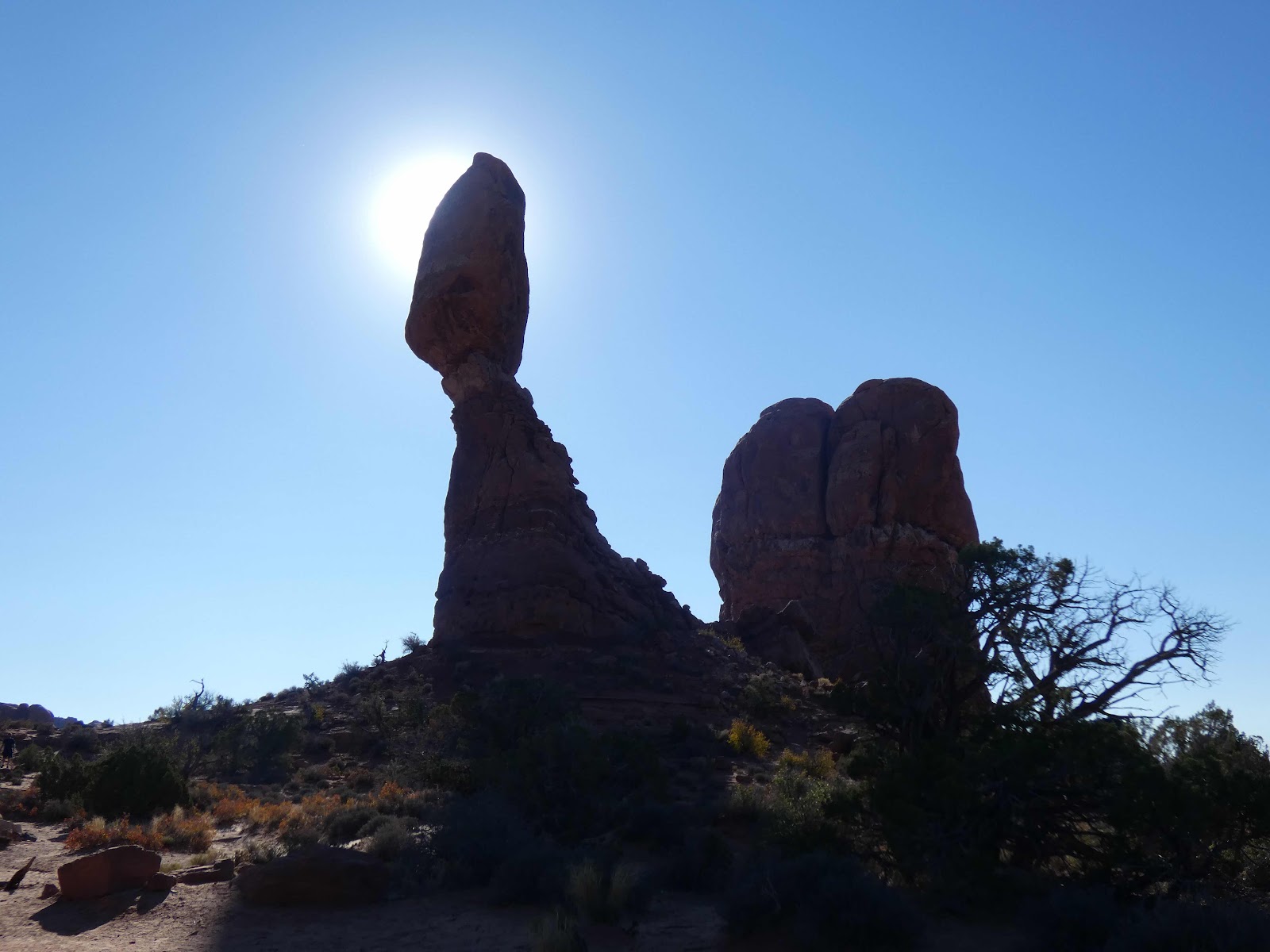
Our first stop was balancing rock.


The park has at least two thousand rock arches as well as many other rock erosion formations.


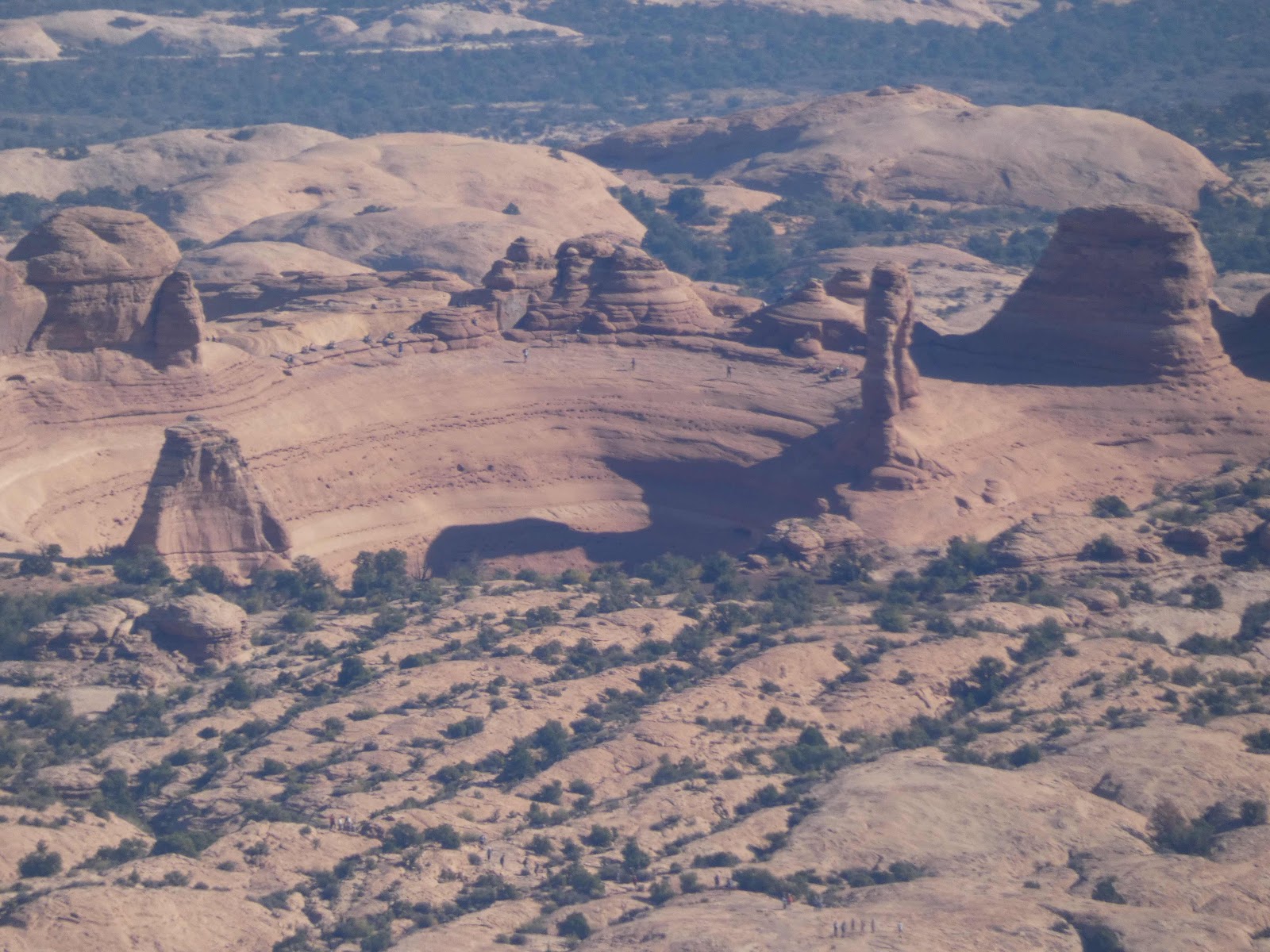
We then visited Delicate Arch, probably the most famous in the park, as it’s on every Utah number plate. Shortly into the walk we could see the arch from a distance.


It’s very difficult to take a photo of it without people.


On the way we saw some petroglyphs.


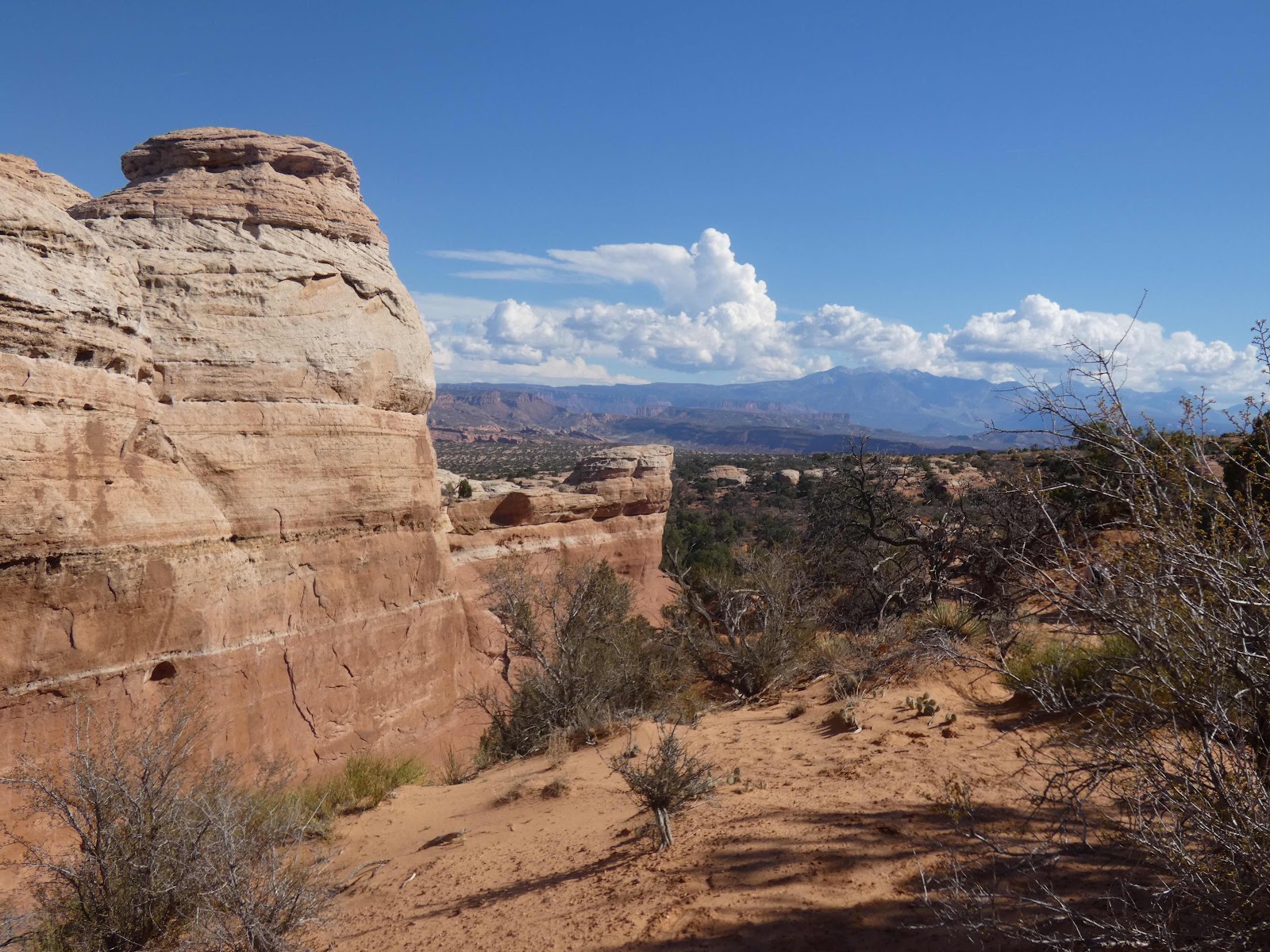
And expansive views.


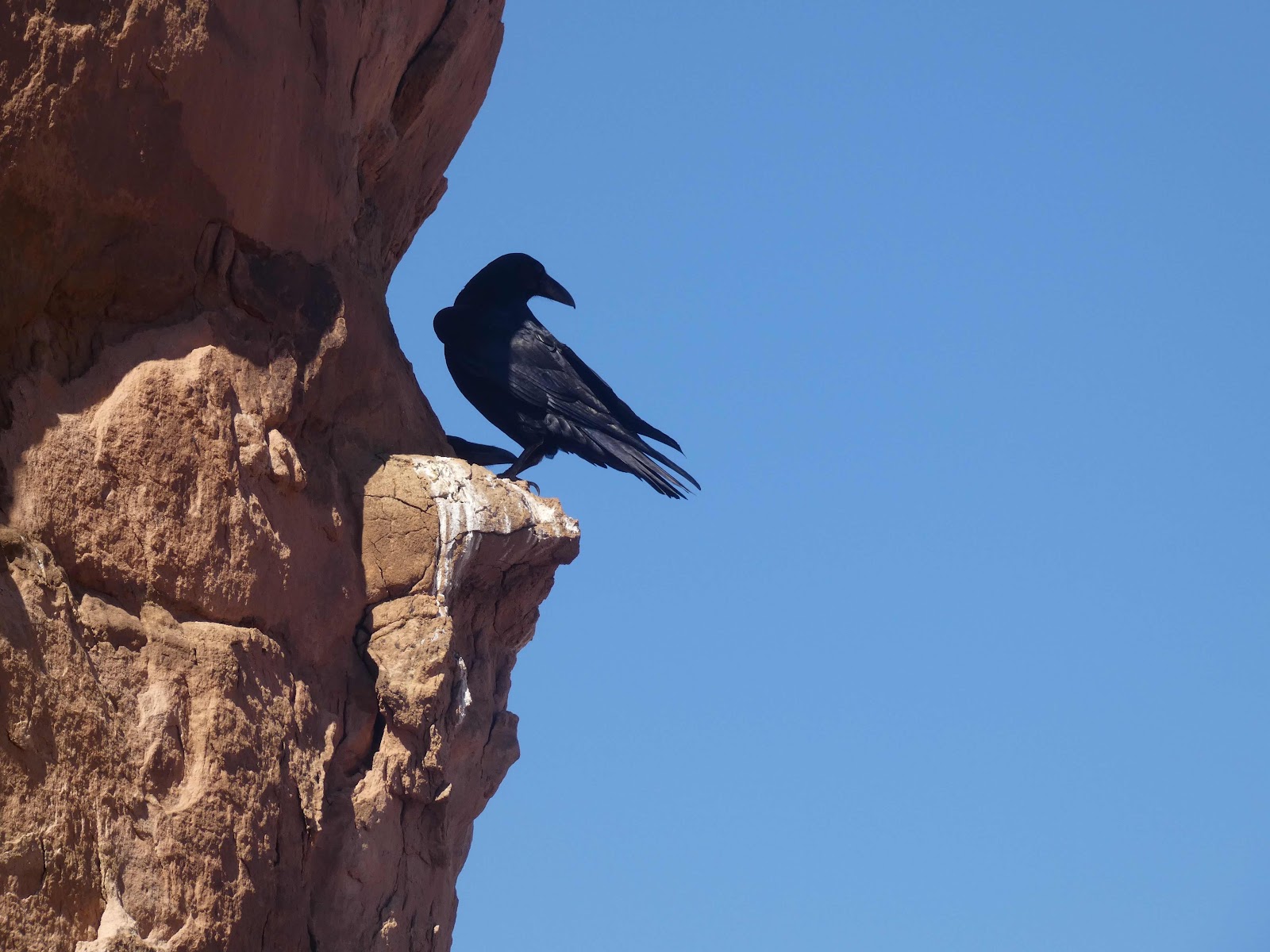
There was a bird on one of the pillars near the arch.


And the views from the arch were great.


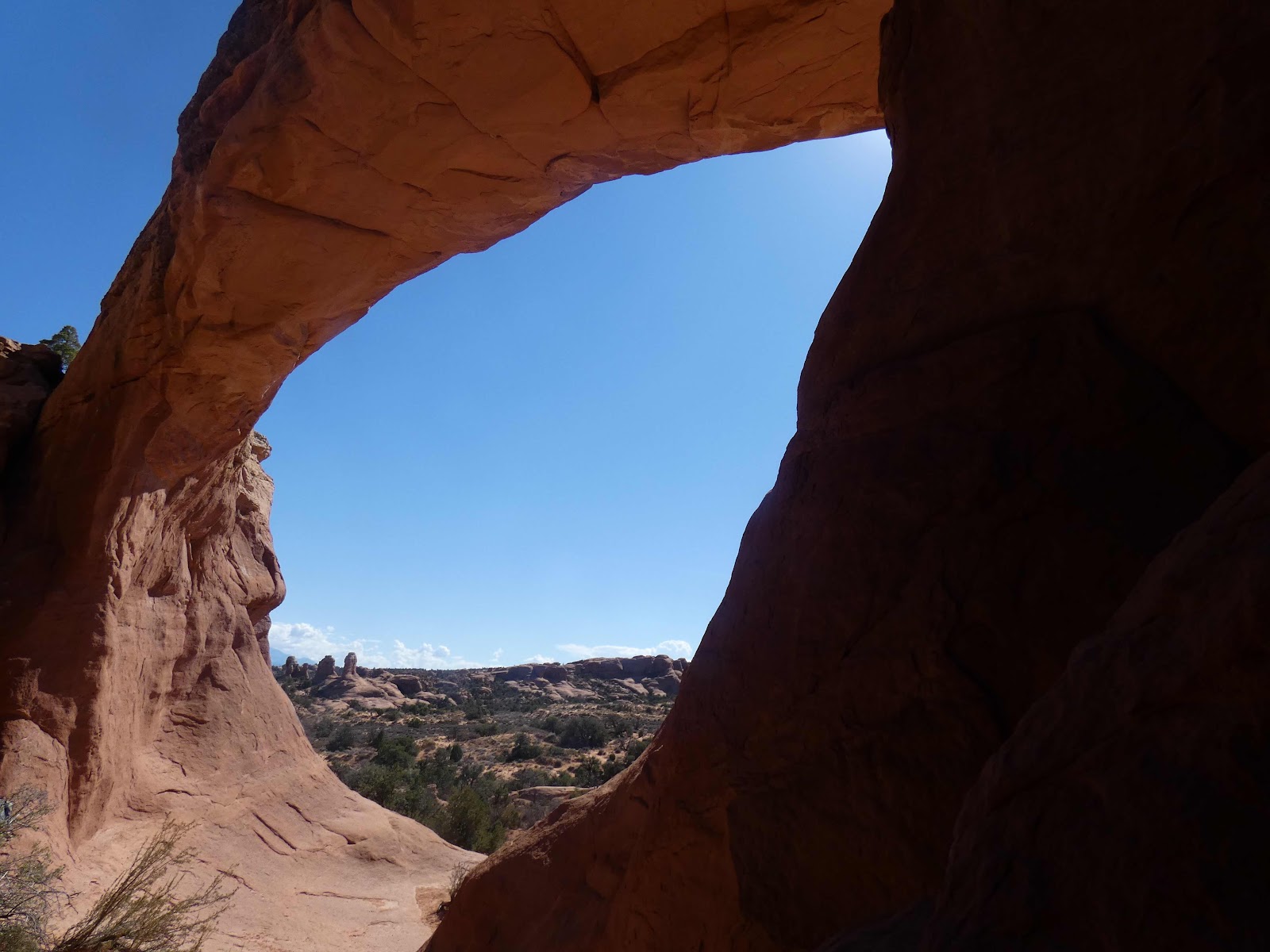
Later, we walked to Broken Arch.


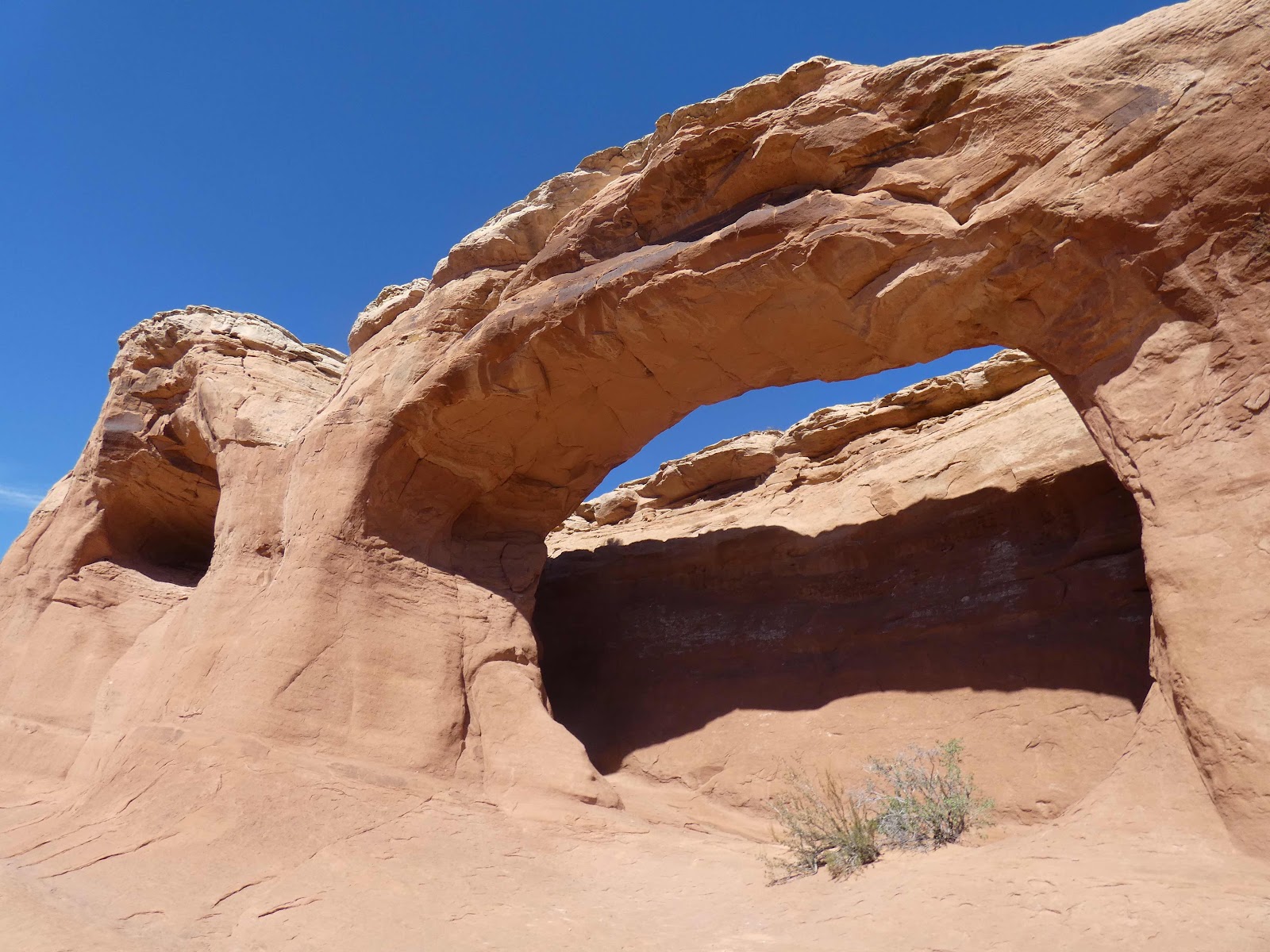
And saw Tapestry Arch.


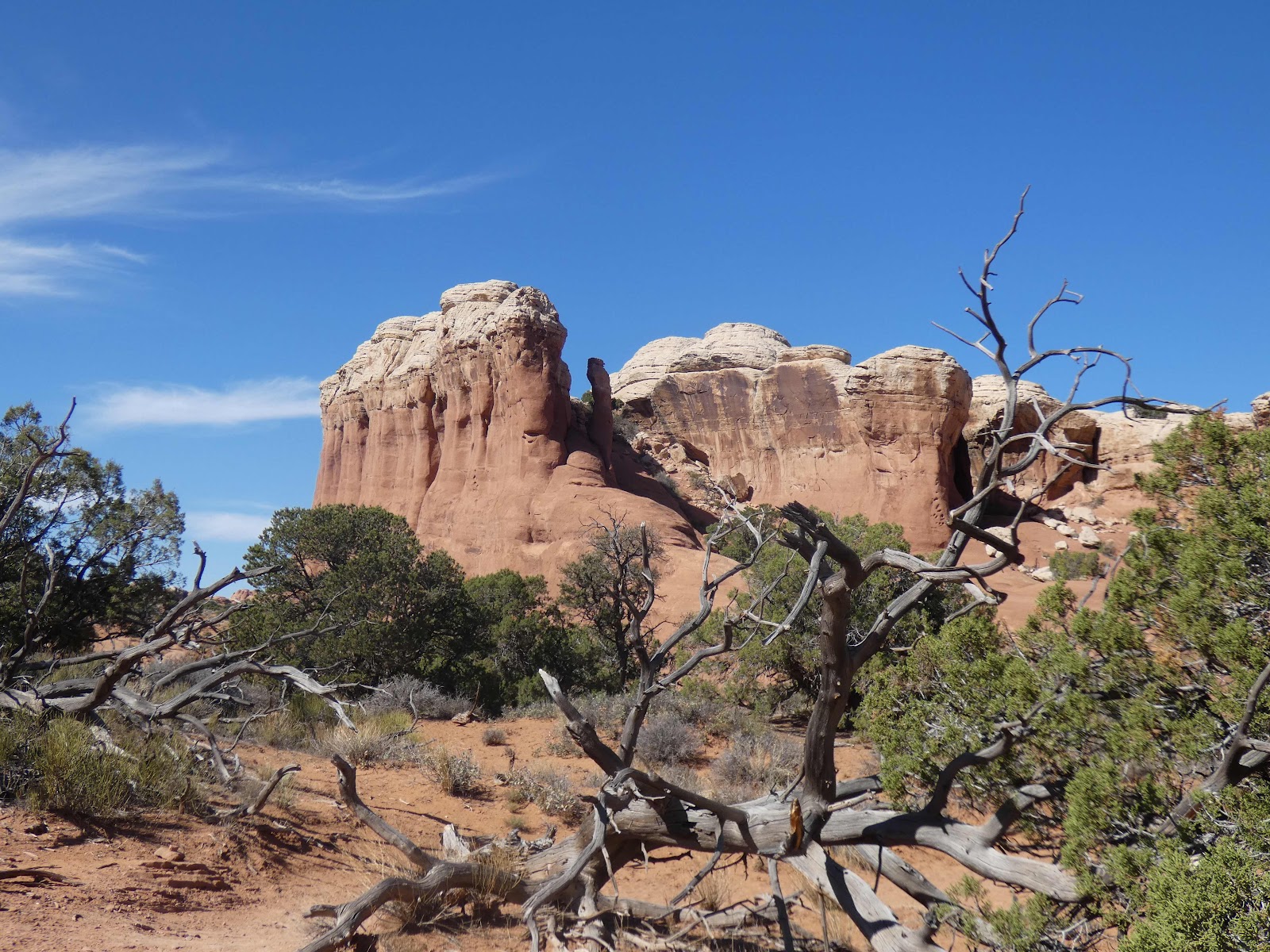
The rock is all called slip rock, but it’s very easy to walk on it, even when you’re at angles where you’d slide off anything else. It’s very beautiful country, and it’s no wonder the park is so popular.