Wednesday, 14 August 2024

It’s the Dry, but there’s still some water

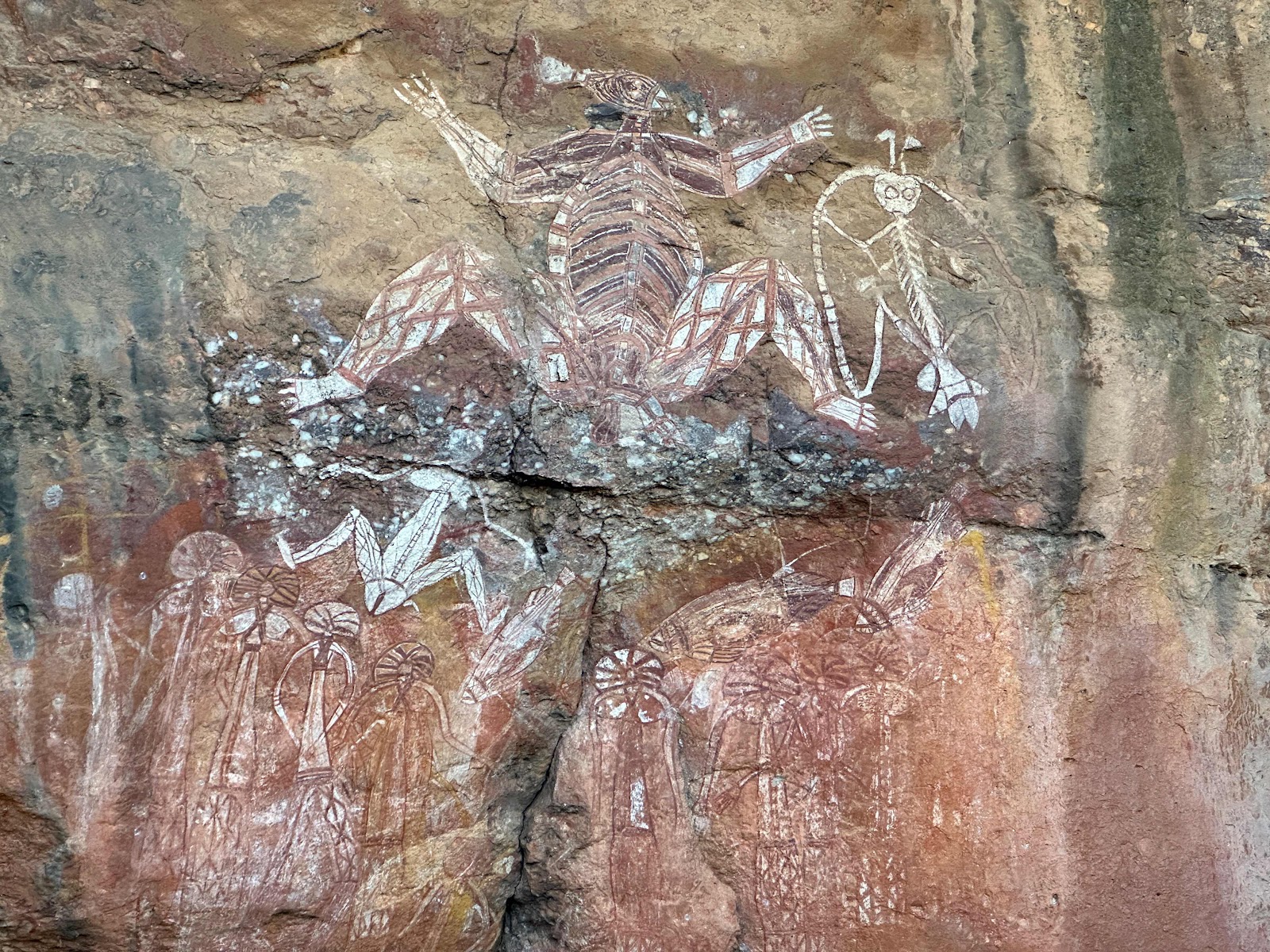
On our second day, we started by visiting what’s known as the Nourlangie Rock Art site (someone got the names of two sites mixed up, so they’re gradually trying to rename them back to the correct ones). The rock art includes a couple of depictions of the lighting man (top right). This one includes his wife and is used to teach the story.


There were a lot of other rock art pictures, including this one of ceremonies.


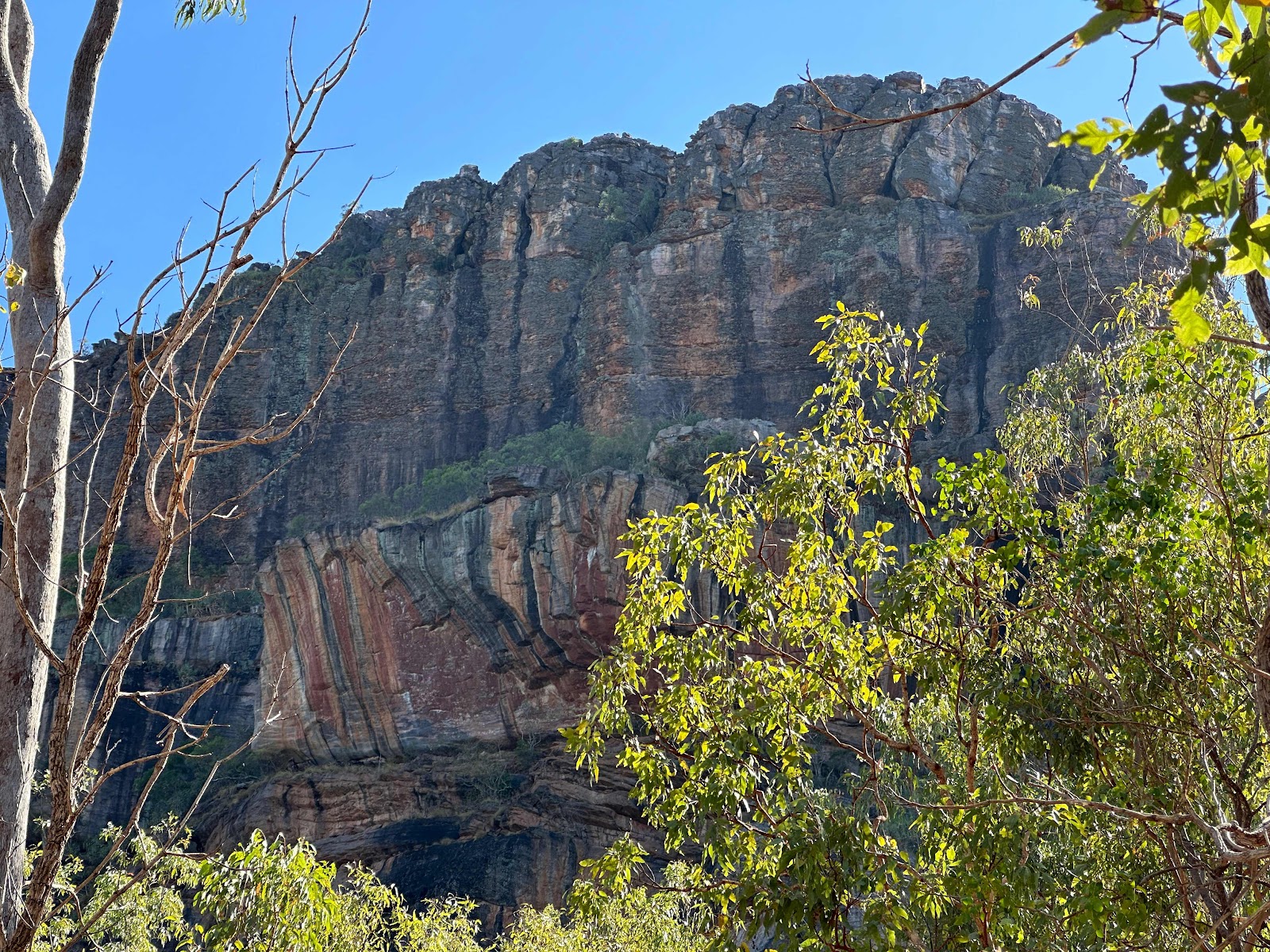
The rock outcrop where these were located is really high an has some really gorgeous colours.


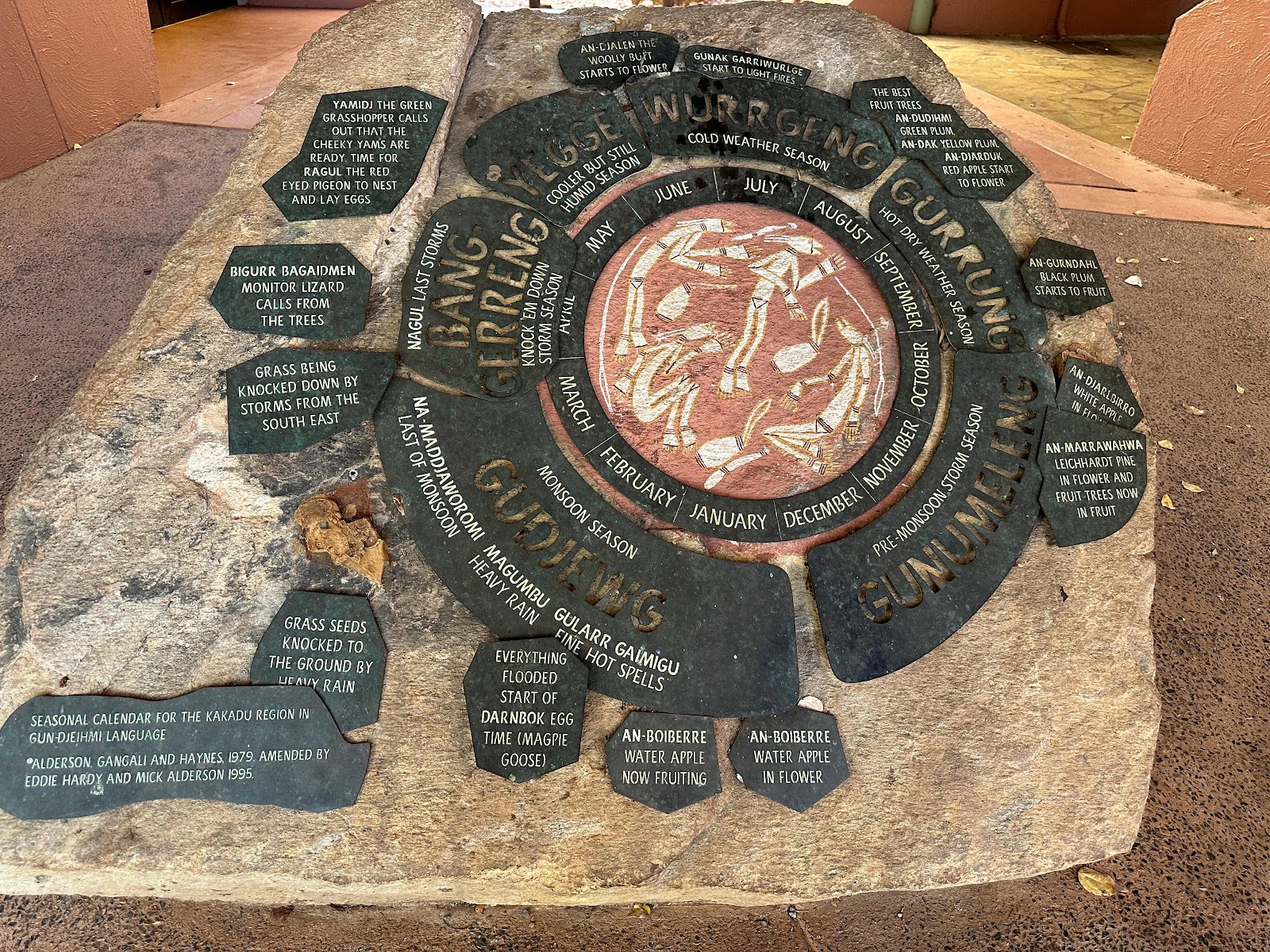
Next we visited the Warradjan Cultural Centre. It was a wonderful place, but you’re not supposed to take photos inside, so you’ll have to be satisfied with the drawings of the seasons outside.


The Yellow Water billabong was our next stop, where we glided through the billabong and part of the South Alligator River looking at the wetlands and the birds and other animals. 


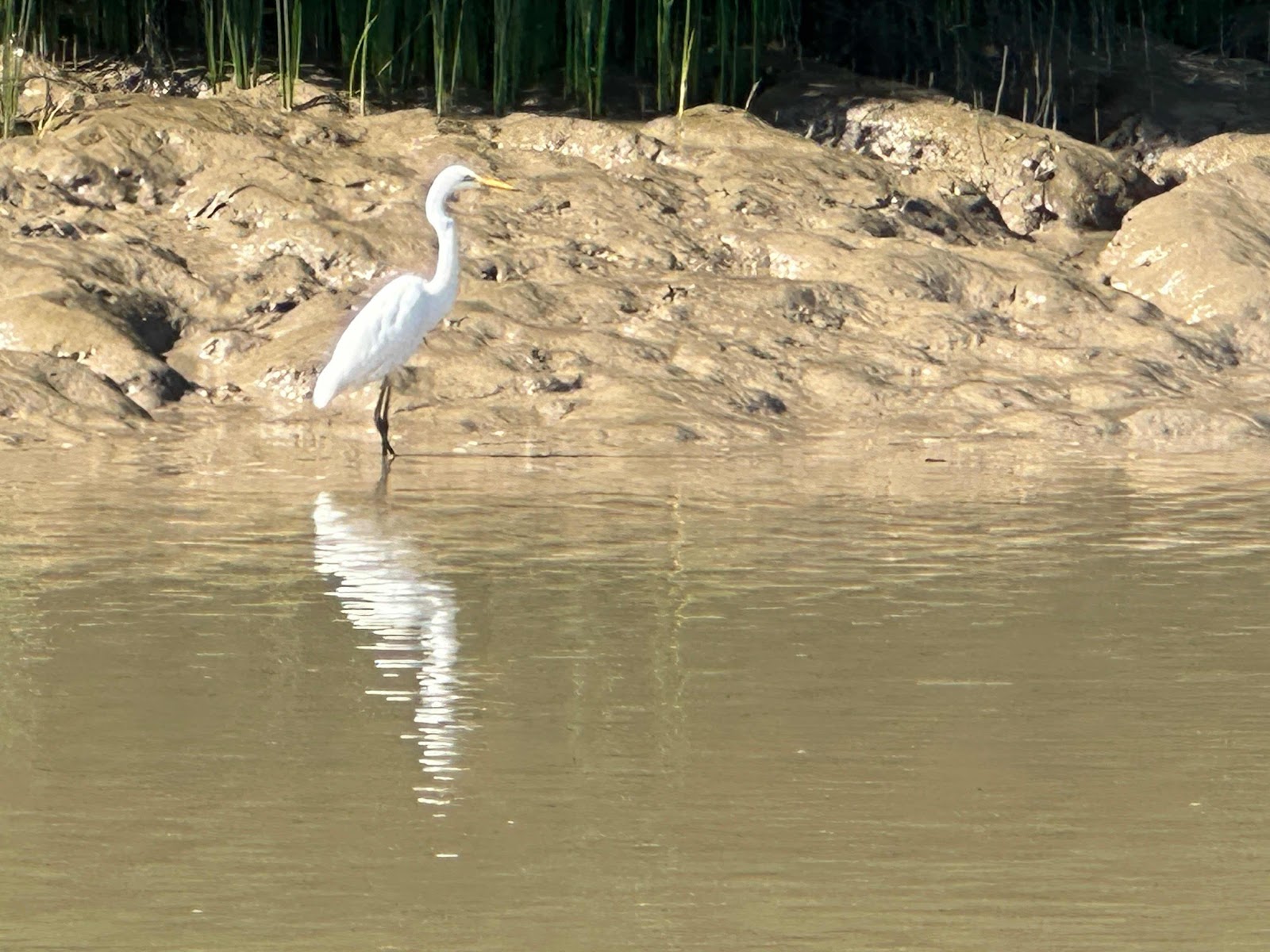
We saw all four types of egrets (the fourth was introduced, with water buffalo), three are in this photo 


while the greater egret entertained us trying to eat a catfish with an ibis looking on.


There were lots of whistling ducks, of both species.


Both male and female darter. The female is next to the magpie goose.


There were adult and juvenile Jesus birds.


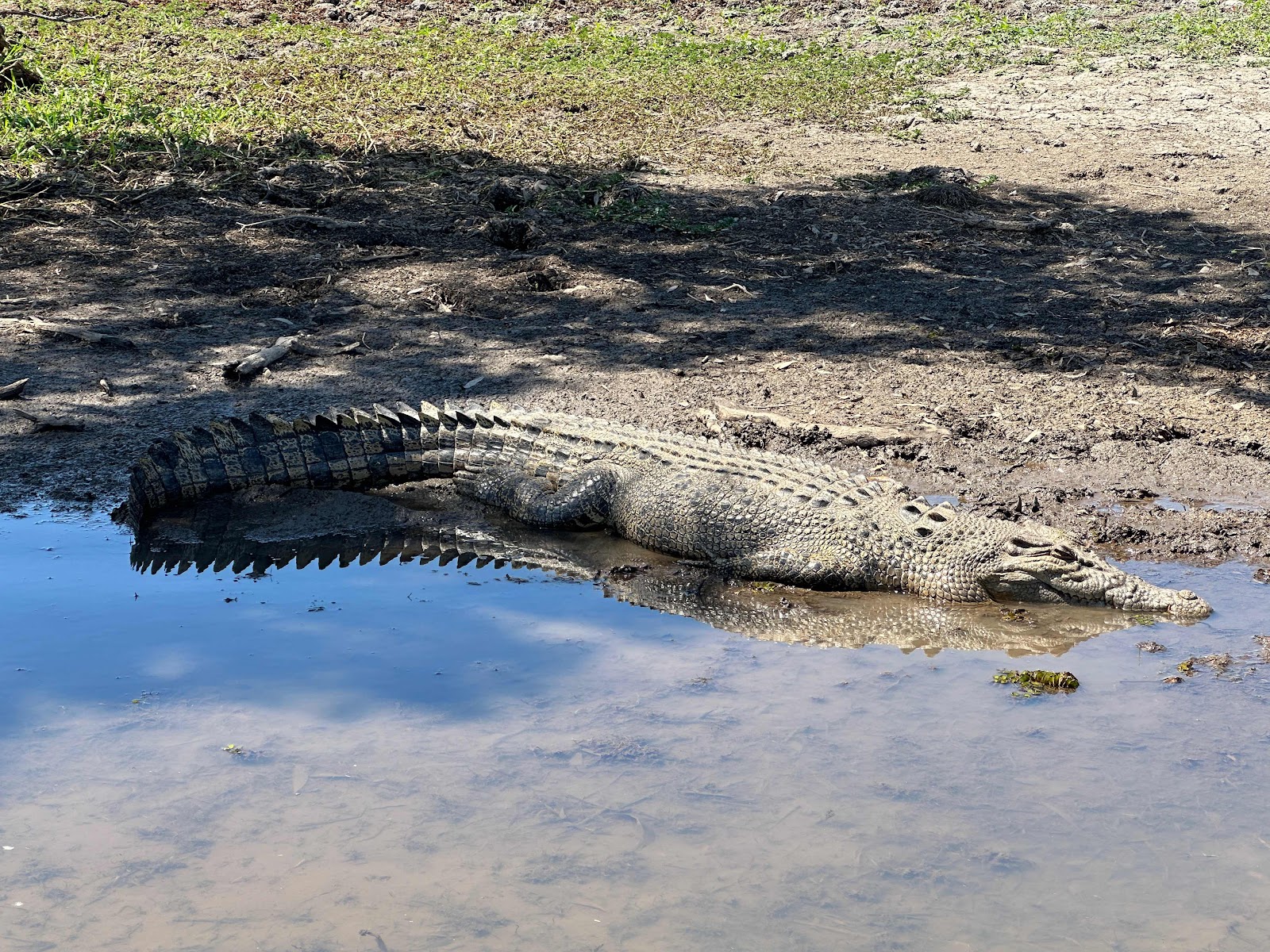
And quite a number of salt water crocodiles.


We even saw some water buffalo in the distance.


Finally, we visited Leilyn (Edith Falls) and some people had a swim.


Tuesday, 13 August 2024

Lots of crocs

I’m currently on a four day tour of places near Darwin. Judging by yesterday, they’re trying to include too much. We kept on being late for everything (including lunch, where it had already been taken away before we got there). The bus driver was about half an hour late picking us up, and I guess we were about half an hour behind from then on.

First up, we went to the Adelaide River 


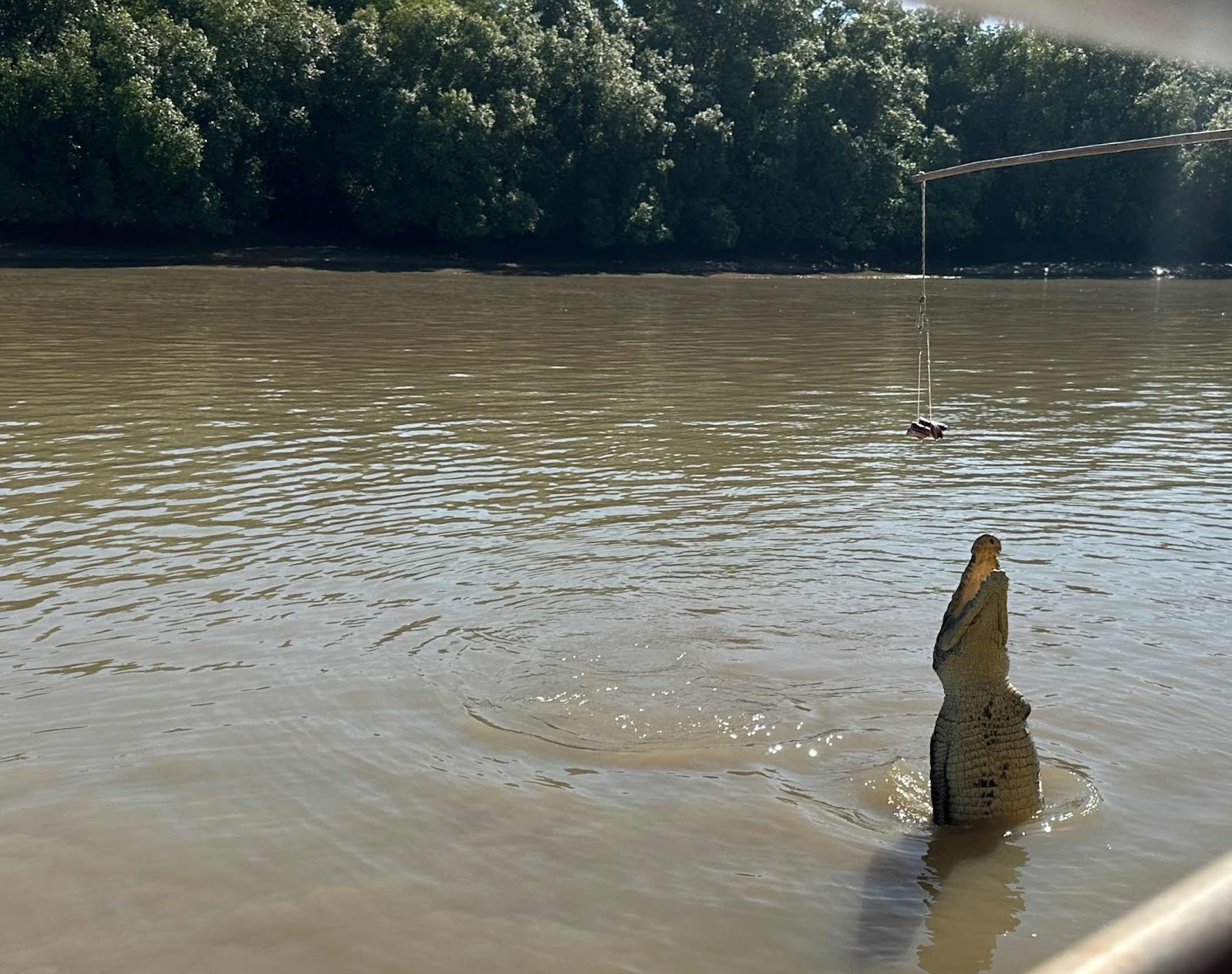
(over 1600 or 2000 crocodiles, depending on who you ask) for a cruise down the river while being closely monitored by the crocodiles. It’s advertised as the jumping crocodiles tour. Several named crocodiles, including Stumpy, Candy and Doris, came zooming out to the boat when it stopped in their part of the river. Doris is the one with a stick. They often lie in the river with sticks in their mouth at this time of year, hoping that cormorants will try to take the stick for a nest.


The second person manning the boat dangled strings of buffalo meat from a rod and enticed the crocodiles to go up in the air to catch it. After a performance, the crocodile got its meat, and we went further downstream. 


You may notice that Doris (the crocodile jumping) has only one front leg. Stumpy had one and a half legs left. They often lose legs when they fight. 

The Adelaide river is a tidal river, and we were there in the morning at low tide. Because of this, we saw an extremely small crocodile, which would normally be hiding in the mangroves. Everything eats them (including cormorants) which is just as well since crocodiles produce enormous numbers of eggs.


On the way back, they attracted whistling kites by holding up pieces of meat, that the kites snatched in flight.


We also saw many corellas, cormorants and sea eagles.


Then we travelled to Kakadu National Park, a world heritage site (one of the few which is sited for both natural and cultural values). I went on the plane trip over the park, including the Ranger Uranium mine,


the savannah woodlands 


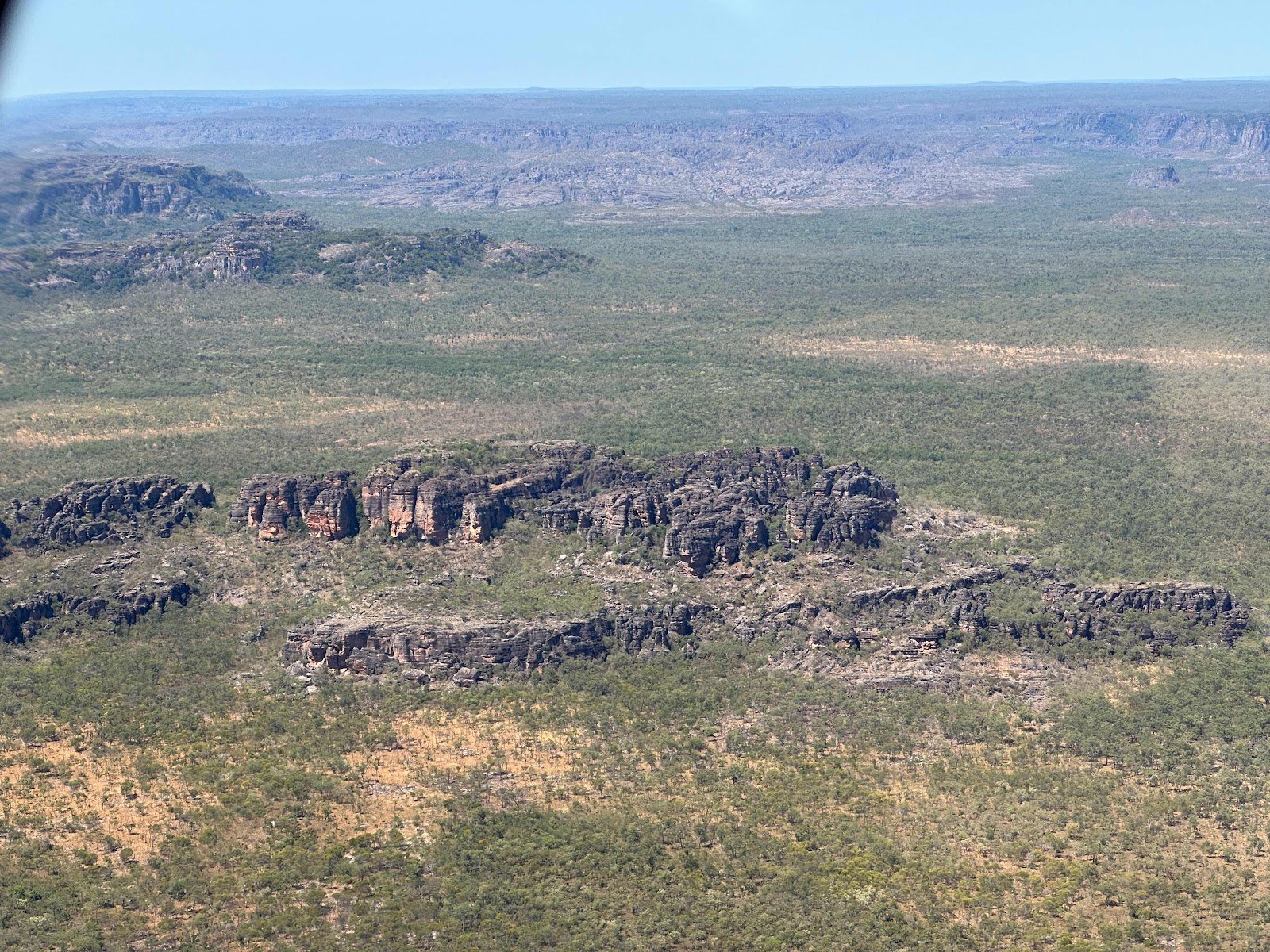
the stone country 


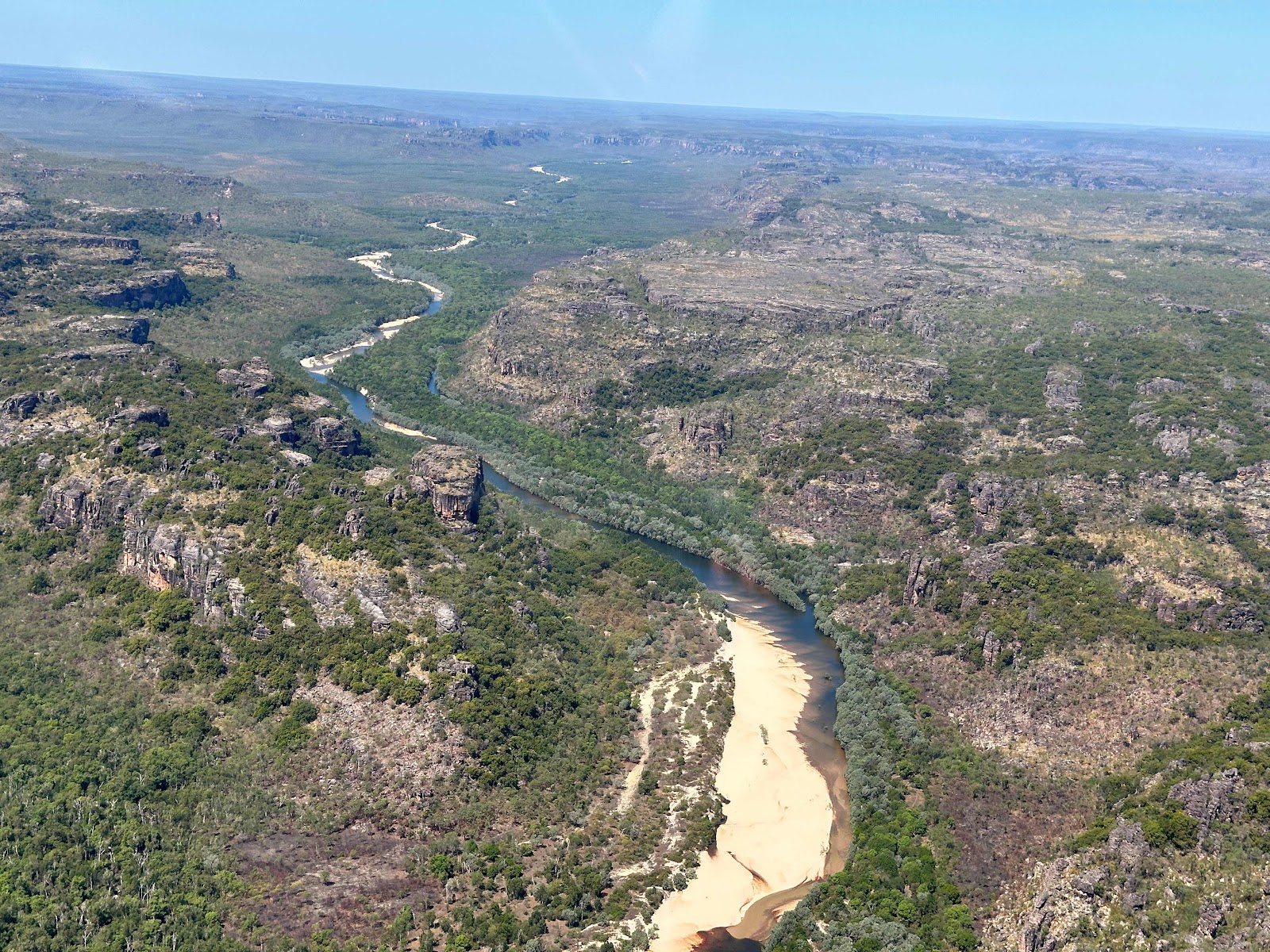
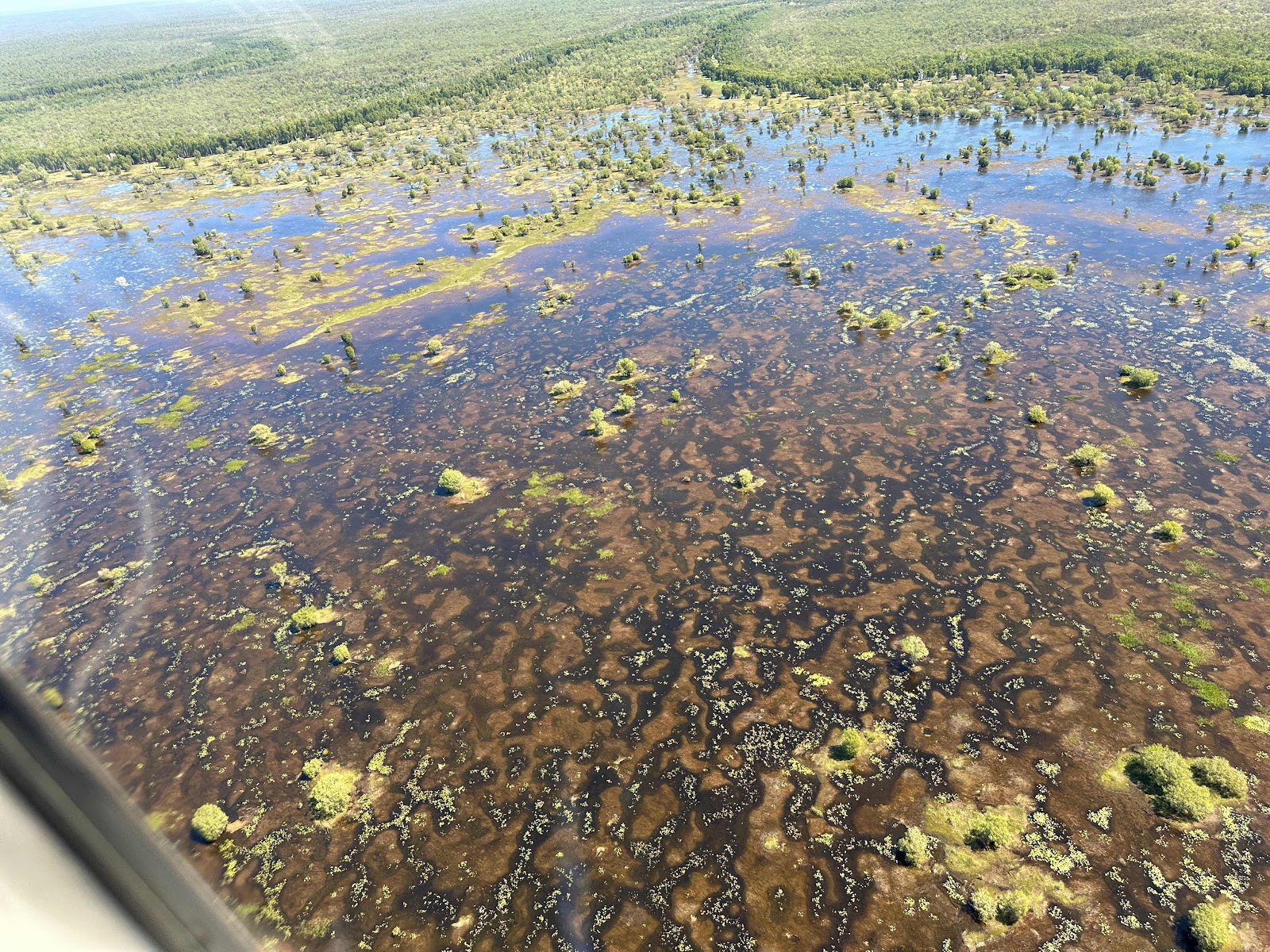
and the wetlands that are visited by 1% of the world’s migratory birds.


Later, we visited the Ubirr, but stopped at Cahill’s Crossing on the way. This is where the road crosses a river and the cars have to go through water. It’s got concrete, and it’s not much of a dip at this time of year. There are notices saying no pedestrians are allowed on the crossing itself, so someone and his kids were in the water on the crossing, fishing. With at least seven crocodiles looking on.


Ubirr is a rock art wonderland, with rock art probably at least 20,000 years old. There’s a lookout where you can take great pictures of the sunset. I checked out as much rock art as I could instead. The rest of the bus was more interested in the sunset. One of the pictures was of a thylocine - which became extinct in this area at least 4000 years ago. 


It would have been a difficult place to paint.


Monday, 12 August 2024

Australian Alps

Yesterday I started my latest trip by travelling from Canberra to Darwin via Melbourne.

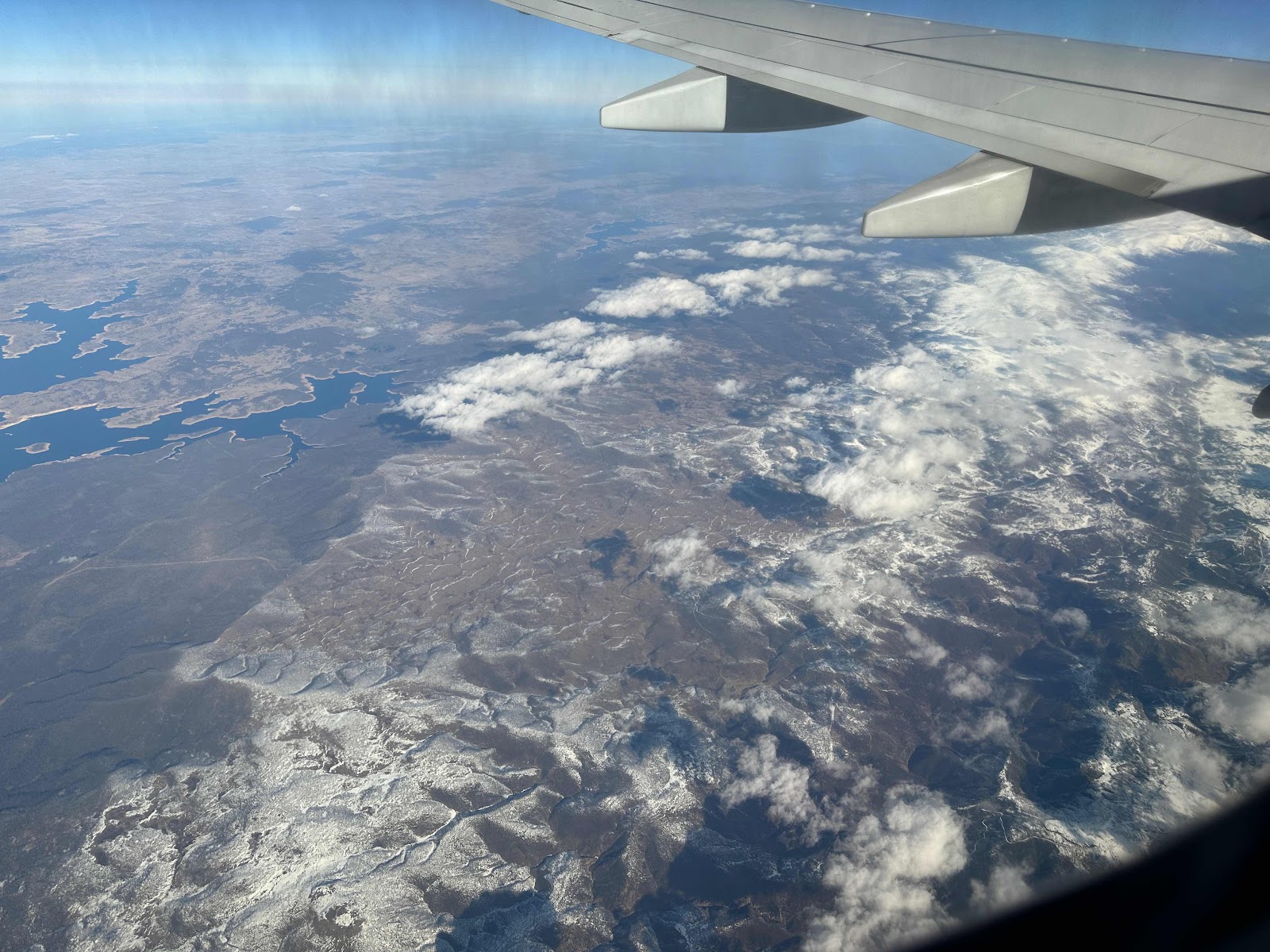
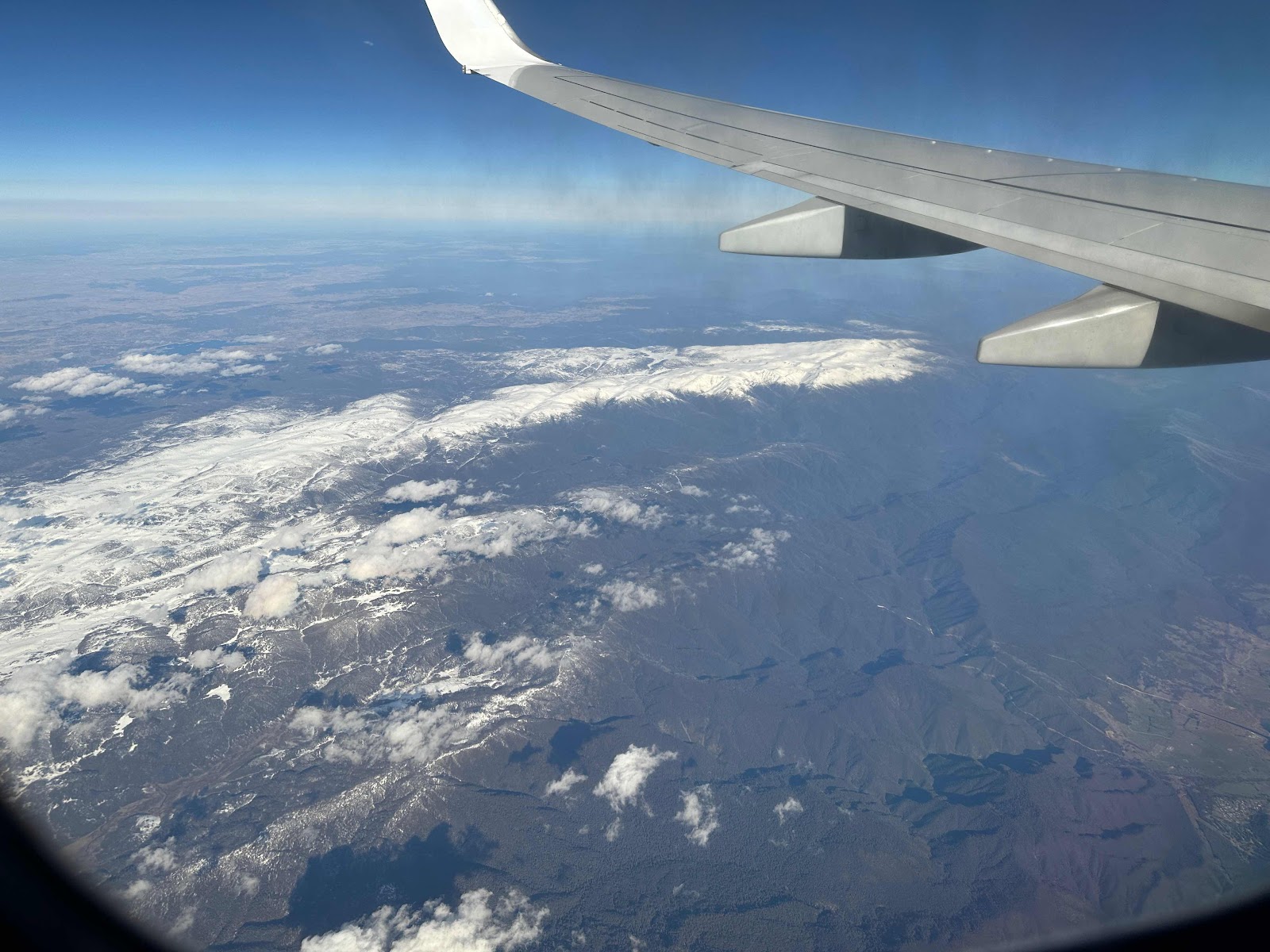
The first flight was fantastic as we flew over the Australian Alps practically all the way, and there wasn’t much cloud. As it’s the middle of winter, and the height of the ski season, there was significant snow cover. I’ve never seen this before. Maybe it was always completely covered in cloud, maybe I’ve never taken this flight in winter, maybe I’ve been on the wrong side of the plane, maybe we took a different route.

First off, we saw the Snowy Mountains and the extensive areas of snow in New South Wales.


Then we passed over the Mount Hotham and Falls Creek ski fields. You can see Rocky Valley Dam, next to Falls Creek in the background, and the Hotham ski field in the foreground, with the skinny line of snow along Mount Feathertop that you can use to ski between there and Falls Creek. When I was cross country skiing, we often used to go to Falls Creek and walk over the dam wall to ski on the plains beyond the dam. Although Hotham had some cross country skiing, it was mainly for downhill skiers.


Then we saw The Bluff with snow along the top of its escarpment, as we neared Mount Stirling.


Then we passed very close to Mount Stirling and Mount Buller. Although I’ve skied more at Mount Stirling than anywhere else, I’ve never been to Mount Buller. It’s only for downhill skiers, and being so close to Melbourne, it’s possibly got more lifts than any of the other resorts, and is certainly completely covered in ski runs.


The rest of the trip was in darkness as I had four hours in Melbourne. However, the flight took half an hour less than it should have, so I was in bed before midnight!

Saturday, 2 March 2024

Trip Summary

Today we were at sea all day, going to Fremantle, where the trip will end. It’s time to reflect upon what I’ve done and seen.

This isn’t normally the time of year I’d plan to visit the places where I’ve been. It should have been the wet season, and everywhere was hot and humid until we reached Houtman Abrolhos where it was very windy. On Cocos (Keeling) Islands, I was the only tourist until the next plane came in on Tuesday. Being somewhere at completely low season makes life a bit difficult for a solo traveller because a lot of options aren’t open, and tour companies need a minimum number of clients to be able to make any money, so even the things that are open can be difficult to experience. Sure, we had a huge storm for the entire cruise down the coast, but this isn’t really the time it should have been run because it’s normal for that type of storm to occur at this time of year. The Western Australian coastline around Broome and the Pilbara is one of the most cyclone prone coastlines in the world. And the timing of the cruise dictated the timing of the visit to both Cocos (Keeling) Islands and Christmas Island.

However, the heat and humidity wasn’t as bad as I expected. The wet season was very late, causing the red crab migration to occur just before I went to Christmas Island. In fact, I went to Christmas Island at exactly the best time - the crab migration was finishing, so I saw it (not quite in its full glory), and the roads gradually opened, so I could see all the other things on Christmas Island as well. Not many people manage to time their visit so perfectly. And I was there for Chinese new year. It’s much more popular in the dry season, when diving is better, but I don’t dive. The crabs prefer high humidity, so I went at the right time of year to see them. Christmas Island was amazing, and I’m really happy I went. I would have preferred to stay for two weeks.

Cocos (Keeling) Islands were fantastic too. However, I think I would have preferred to stay in different accommodation with proper air conditioning (because all the windows had no glass, the air conditioning had a tough time working). I liked seeing all the crabs, but it would have been better to visit a few weeks later, when everything was starting to happen. It would have been nice to stay here longer too.

The cruise was good. Everyone was nice and the crew did a fantastic job. However, it was billed as the Coral Coast, and we missed out on seeing much coral at all. We were supposed to visit two world heritage areas, but really didn’t see much of either of them. We missed out on visiting almost all of the sites of historical significance. We visited only four places on our itinerary. I expected that I would see all the things I had wanted to see between Broome and Perth, but I’ll need to come to this area again to visit those things. So it’s a bit disappointing.

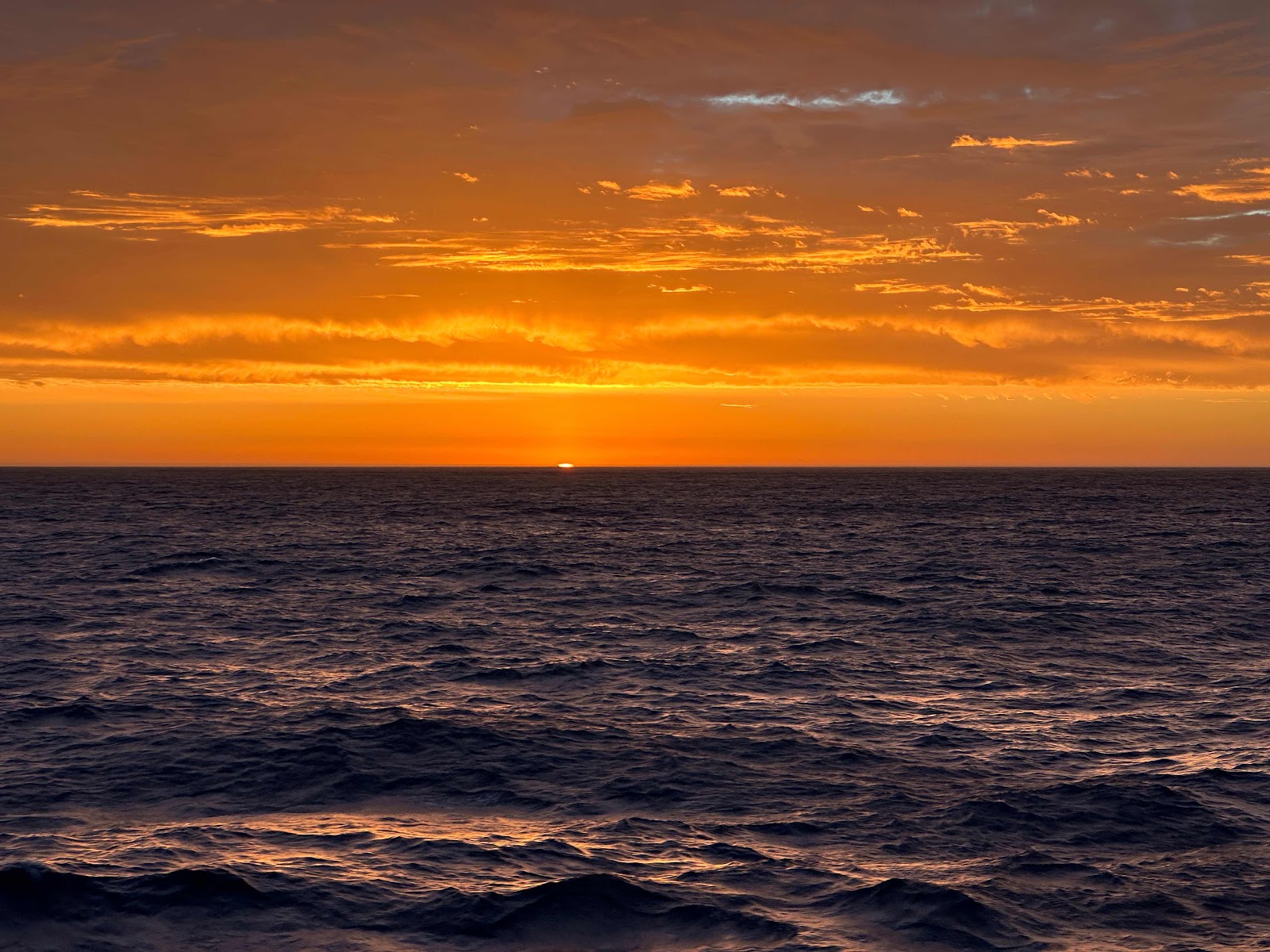
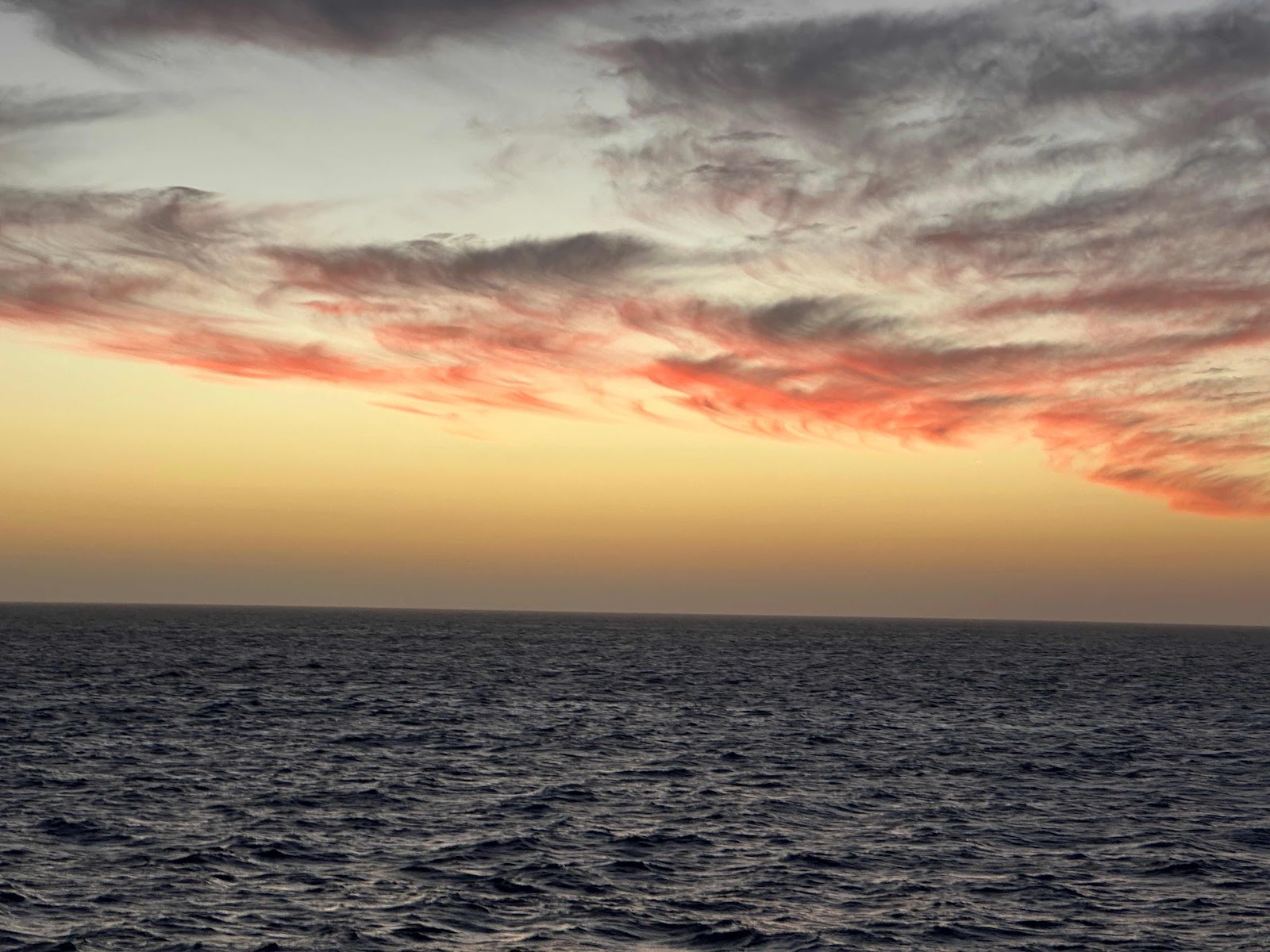
We’re landing in Fremantle tonight rather than tomorrow, as the storm is still with us. This is sunset.


And this is the storm following us. Note there’s a rainbow in amongst the sunset colours.


Friday, 1 March 2024

Houtman Abrolhos - Easter and Pelsaert Groups

The Abrolhos is made up of a lot of small islands, often covered in the fishing shacks of crayfishers.

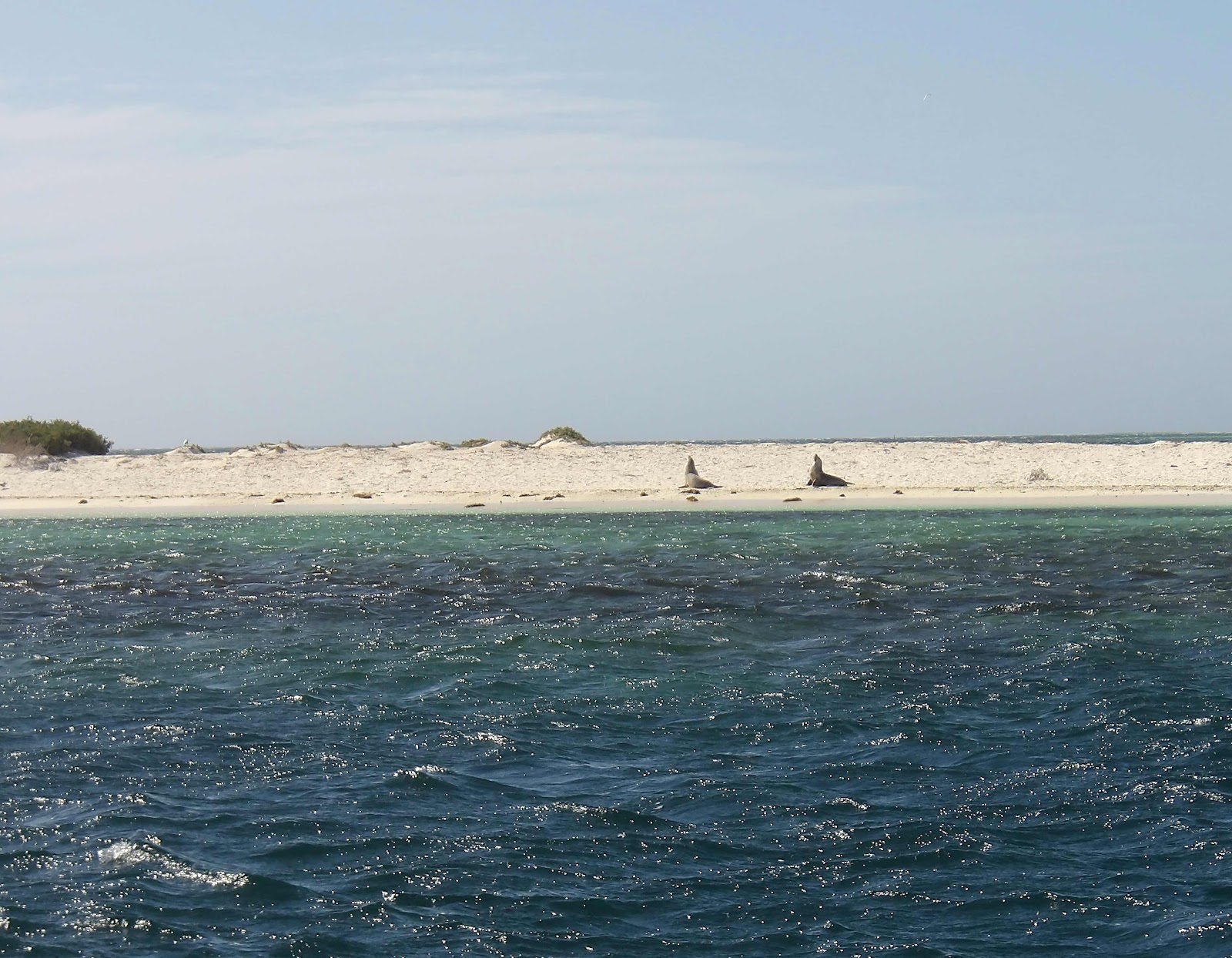
Amongst them is Little Sandy Island, the northernmost home of Sea-lions in Australia.


The island is very small, and we weren’t allowed to stand on most of the island, so that we didn’t disturb the sea lions, as they are quite endangered. There were about ten here, a fifth of the population in Western Australia. 

The wind was horrible, spraying us with sand. It felt like a very uninviting place to be. There was also a current, so we couldn’t snorkel very far either. However, once we got into the water, there was the best coral we’ve seen this trip (because of the weather we’ve missed all the good coral locations).


And the juvenile sea lions are very inquisitive and love swimming around snorkellers, but I didn’t venture out past the shallows, so I didn’t see them.

Afterwards we visited Post Office Island, where we were shown around a shack and the crayfishing operation and pearling operation a family has on the island.


Later there was a pretty good sunset.