Today I started my epic adventure. I went to Dubbo, which I’ve been to a number of times before although I haven’t seen any of its well known attractions, and I’m not going to this time either. I’ve also been to most of the places I passed on the way.
I went to Cowra, which has incredible Japanese connections since it had a POW camp that included a Japanese section. One night the Japanese rioted and escaped, overwhelming the Australians manning the gun emplacements, and killing several with baseball bats and knives. Over 200 Japanese died, over 100 were wounded and over 300 escaped. A war cemetery was built for them, and every Japanese soldier who died in Australia (including those shot down in Darwin) is buried there. Cowra is the site of the first Australian peace bell and they have the best Japanese garden in Australia.
I’ve visited all these on previous occasions, but I’ve never been to the visitors centre before. It has a hologram of the POW camp which was very interesting. It mentioned that there was also a contingent of Indonesian POWs who the Dutch had convinced Australia to intern. At some stage (before the riot) Australia decided that they weren’t POWs but were political prisoners, so they were released. There were also Germans and Italians at the POW camp.
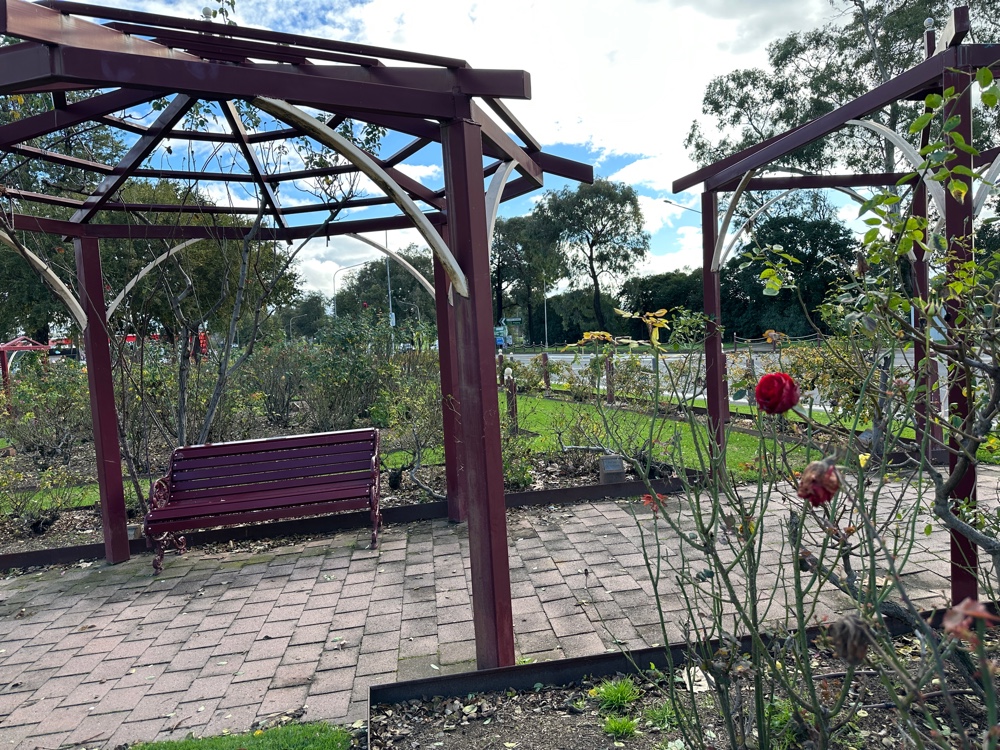
Outside the visitors centre is the Cowra rose garden.
 |
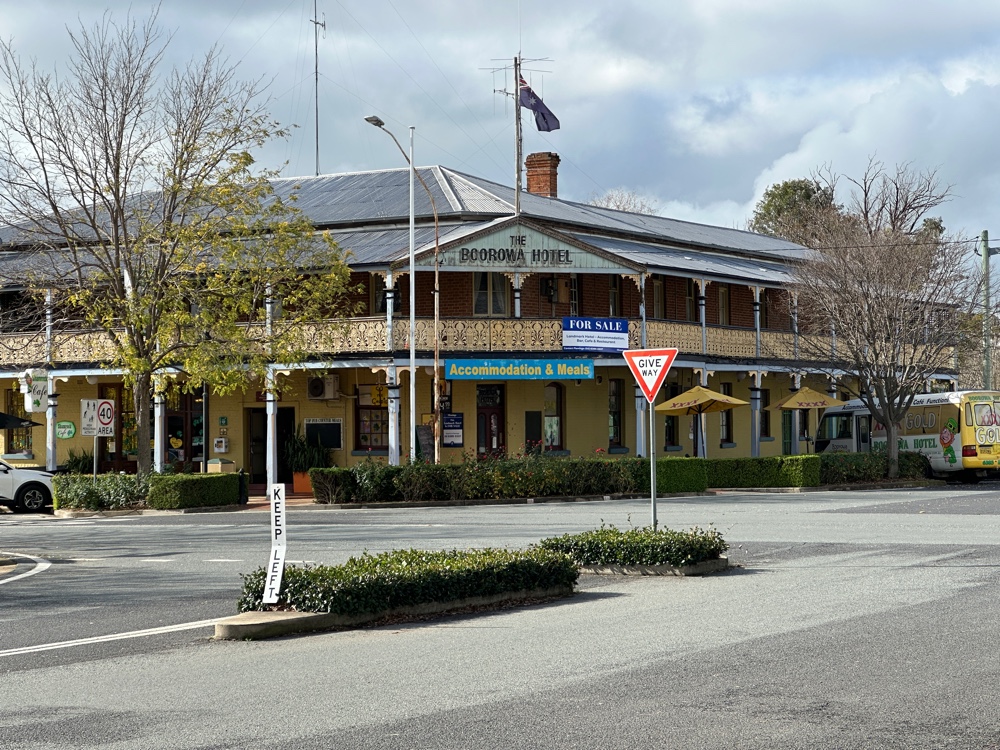
As I arrived in Boorowa I noticed that the sign said they were home to the best merinos in Australia. Since Australian merinos are the best in the world, I don’t know why they didn’t say that they were the best anywhere. Anyway, I thought that was a pretty tall order, so I stopped at the visitors centre and asked why they were the best. I was told that the family that started merinos in Boorowa started them in Australia (wasn’t that the McArthurs I said - well they took over from the McArthurs) and still, to this day they win prizes every year for their fine merinos. Which probably means that they ARE the best in the world.
 |
 |
Parkes was also on my way to Dubbo. Usually I go to Canowindra and visit the age of fishes museum and marvel at the Devonian rocks there. So this time I went a different way, via Parkes. As I was on my way there, I wondered how it got its name. It was obviously named after Henry Parkes (generally credited with being the father of Australian federation after he gave the Tenterfield address). However, Parkes would have existed before Henry Parkes was famous. Evidently the town decided to name itself Parkes after Henry visited it in 1873. It was called Bushman before that.
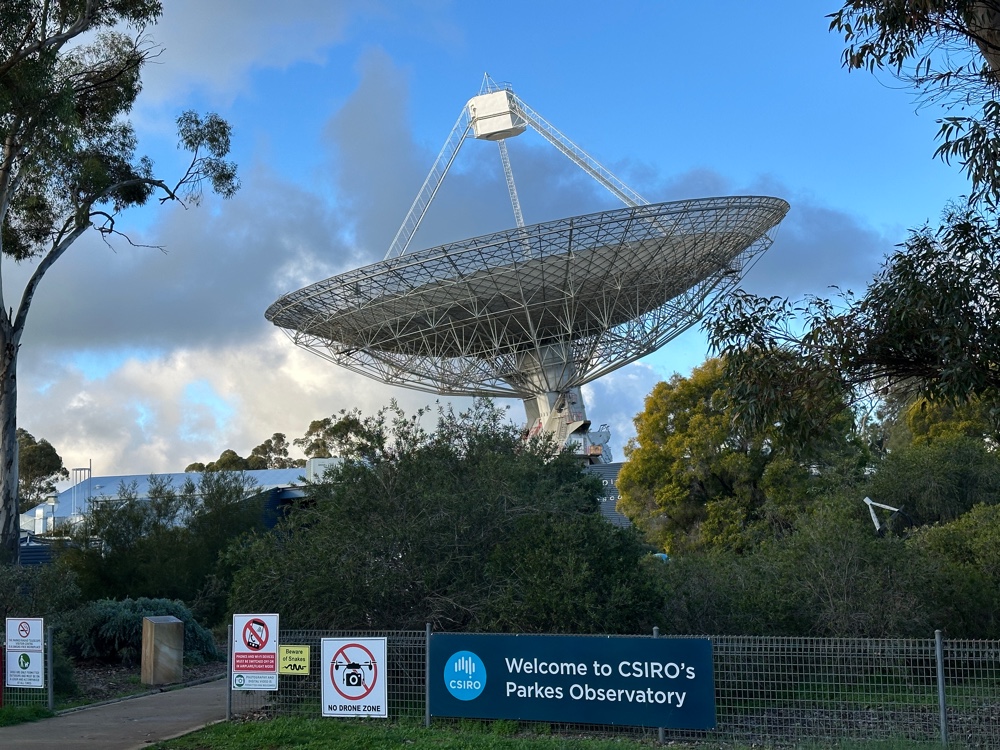
Anyway, Parkes is famous partly because of its telescope and the lies of a film called “The Dish”. “The Dish” is about the first human landing on the moon and the role Australian telescopes had in it. However, the Parkes telescope wasn’t the only one involved, and, in fact the actual first footsteps on the moon were recorded by the Honeysuckle Creek telescope, a few kilometres from where I live, because the astronauts decided to jump ship early, and Honeysuckle Creek was the only telescope in transmission range at the time. That’s why the first steps are so blurry. Parkes took over about five minutes later, and because it’s much bigger, the rest of the transmission isn’t as bad. I was surprised that the Parkes telescope is in a valley. All the telescopes around home are on the tops of peaks and I thought that’s where you tried to build them.
 |
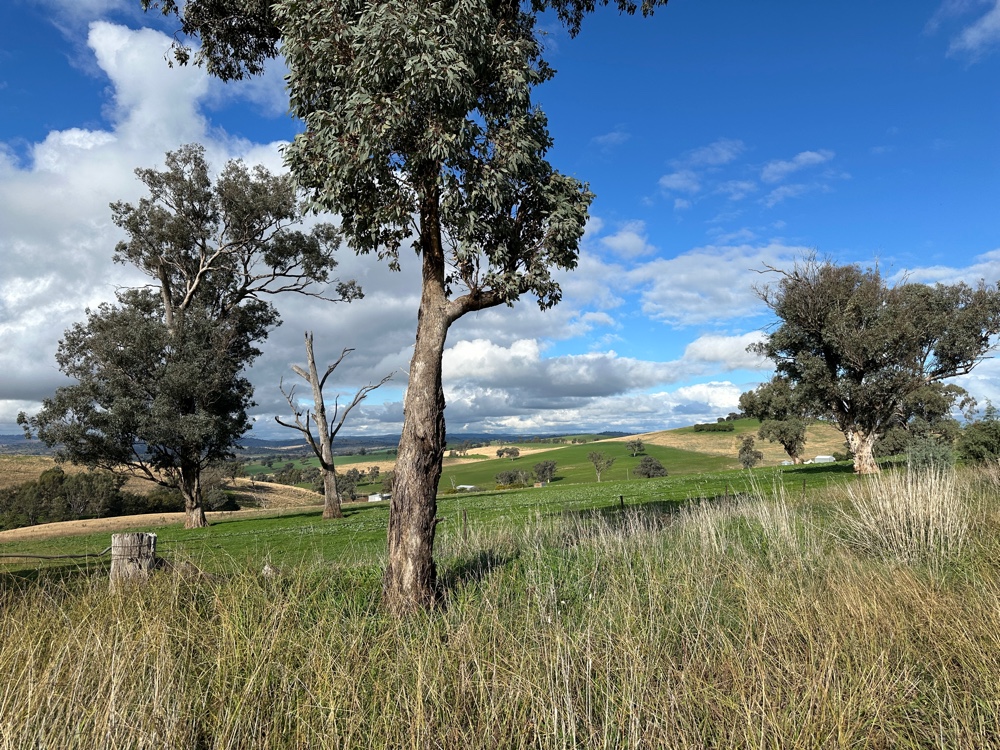
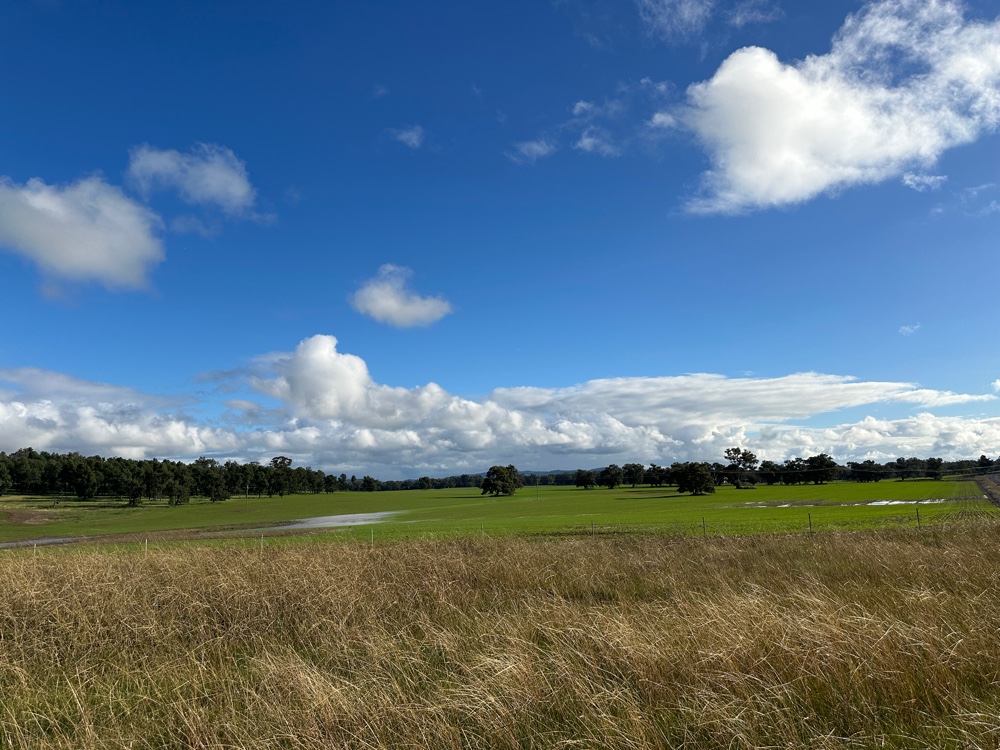
The area is pretty flat, being on the edge of the western plains. There have been a lot of recent rains and the area has a lot of water lying around. This isn’t usual.
 |
Parkes itself is quite a large town and is on the top of the biggest hill in the area. The telescope is a radio telescope and is some kilometres out of town.

No comments:
Post a Comment